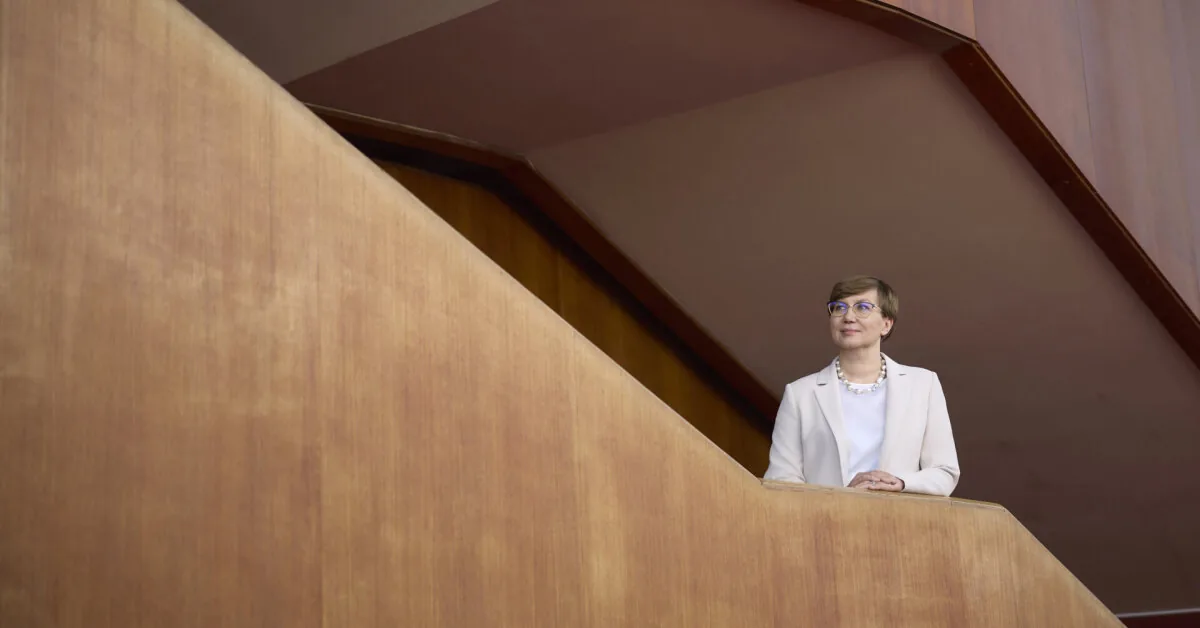
In the new season, the theater will invite the audience to indulge in luxury without rushing – to take time for themselves, beauty, and inspiring experiences. General Director Laima Vilimienė talks about what happens in the theater during the summer, how the new season is formed, what premieres await the audience, and why one should not be afraid of the first visit to the opera and ballet theater.
– The viewer usually sees the repertoire calendar with dates and titles of performances, but most of the work remains invisible. How is the theater repertoire actually born? How far ahead do you plan the season and who participates in this process?
– It is indeed a very complex process – like a ball of yarn twisted from many different threads.
The upcoming 2026-2027 season was finalized about nine months ago, and we have been selling tickets for it since February.
We start planning the repertoire from the premieres – they become the framework of the season, around which everything else is arranged. Every year we present at least four premieres – two operas and two ballets.
Just recently, in June, we submitted the entire 2027 activity plan to the Ministry of Culture. It already includes not only all the premieres of the year but also tours, major events, and other significant theater happenings.
We start planning the repertoire from the premieres – they become the framework of the season, around which everything else is arranged.
The repertoire planning team, consisting of ten to twelve specialists from various theater fields – from artists to technicians – has already begun preparing the 2028 season.
We have already set the titles of premieres and main creative decisions approximately until the autumn of 2029. In other words, the framework of the repertoire is planned at least three years ahead.
A large institution like the Lithuanian National Opera and Ballet Theatre, like many European theaters, must plan everything very far in advance. Only this way can we maintain a balance between classics and novelties and invite top-level international creators, who also plan their work calendars several years ahead.
– You mentioned the balance of the season program. Could you elaborate on what a balanced repertoire means?
– First of all, there must be a balance between opera and ballet. Also important is the diversity of different epochs, styles, and genres. The repertoire cannot consist solely of 19th-century operas or only contemporary works. It must include music from the 18th, 19th, 20th, and 21st centuries.
Speaking of the 21st century, these are mostly works commissioned from Lithuanian authors.
We think the same about creators. We want the repertoire to include Lithuanian artists, internationally recognized creators, experienced masters, and the younger generation.
Overall, the repertoire consists of about fifteen operas and fifteen ballets, so we constantly seek balance and monitor that no direction overshadows the others. This is clearly visible in the upcoming season’s program.
Moreover, the first half of 2027 will be dedicated to Lithuania’s Presidency of the Council of the European Union. This also influences repertoire planning – special events, concerts, and contexts arise that help select certain works.
– Do you monitor audience habits when planning the repertoire?
– We can be proud of a wonderful audience that fills our halls. This is the result of long and consistent theater work.
I wouldn’t say that some performances attract viewers while others do not. Of course, completely new projects appear that require more effort. For example, this year we held the “Festival X” dedicated to young creators for the first time. Such projects need to be actively presented to the audience, with more investment in communication so that people understand what awaits them.
People are interested in getting acquainted with works that have never been shown on our stage before.
If we relied solely on attendance statistics, they would not show much because our halls are always full. We observe various indicators – how quickly tickets are sold, the pace at which halls fill up, which performances require more communication.
When we present a completely new work, it is natural that we need to tell more about it, help the viewer understand what they will come to see. Our audience is educated, curious, and open to innovations. People are interested in getting acquainted with works that have never been shown on our stage before.
Of course, the performances that viewers choose as soon as tickets appear are classics, well-known titles.
– Could you briefly introduce the premieres of the new season – what makes them special and why are they worth waiting for?
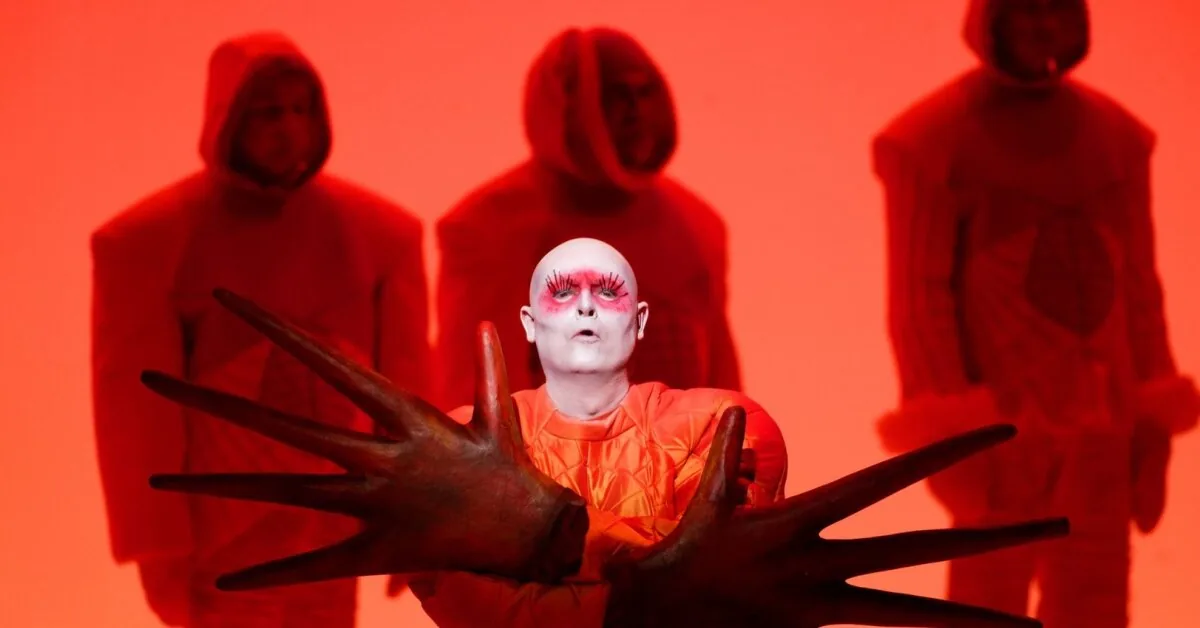
– We start the new season with Žibuoklė Martinaitytė’s opera “Inverted Reality” – a contemporary work by the Lithuanian composer created together with the world-renowned director Robert Wilson. Although the director did not manage to complete this work, the creative team finished the performance.
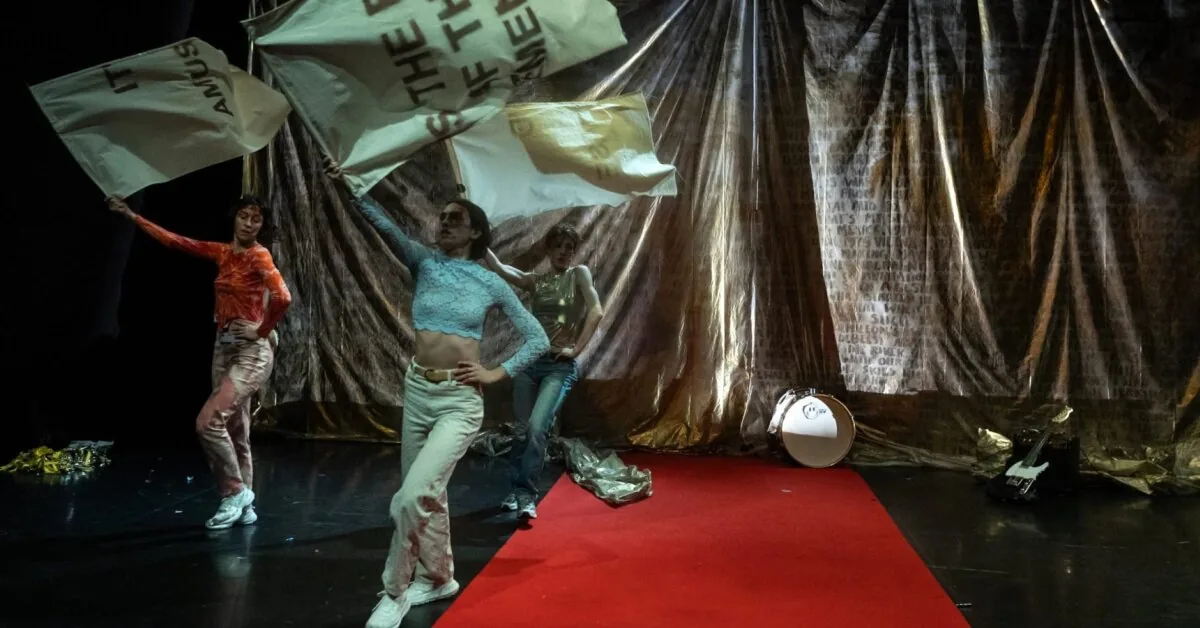
In autumn, we will also present the contemporary ballet diptych “In the Rhythm of Life,” which will consist of two choreographic works.
The first is David Dawson’s “Heart Rhythm.” We are very pleased that this world-class choreographer is creating a performance for the Lithuanian National Opera and Ballet Theatre troupe for the first time. Our troupe made a very good impression on him, so we are happy to start this collaboration.
The second is Martynas Rimeikis’s “I Like,” created to the music of Vidmantas Bartulis. It will be a beautiful contemporary ballet performance.
In spring, we will present Giuseppe Verdi’s “Macbeth” – a monumental opera rarely staged in Lithuania.
We will end the season with the ballet premiere “The Lady of the Camellias” based on Alexandre Dumas’s novel. The performance will be created by choreographer Annabelle Lopez Ochoa. She stands out for her ability to tell stories very expressively through dance, so we expect a very strong dramatic performance. This production will also be our first co-production with the Estonian National Opera. It is another step in developing the creative partnership of the Baltic countries, which we have been consistently developing for several years.
– Summer is a time when many leisurely plan cultural evenings for autumn and winter. What performances would you recommend to those who already want to choose time-tested LNOBT repertoire works?
– Our viewers usually split into two groups – some prefer opera, others ballet.
An interesting, unconventional, provocative production of Jacques Offenbach’s opera “The Tales of Hoffmann.” It is a well-known classical work interpreted in a contemporary way on stage. The performance will be shown at the end of January and the beginning of February 2027. We are pleased that Gabrielė Kupšytė – a young Lithuanian soloist successfully building an international career – will sing in this performance.
For classical opera lovers, I would definitely recommend Giuseppe Verdi’s “Aida,” returning to the repertoire after a long break. It is a monumental opera very popular with the audience. A series of six performances will be shown at the end of October. Since it is one of the most popular repertoire works, tickets usually sell out very quickly, so I would recommend securing them in advance.
Mozart lovers I would suggest the contemporary, aesthetic “Don Giovanni,” where classical music blends with modern stage language. The role of Don Giovanni will be performed by Kostas Smoriginas, so his fans will have a great opportunity to hear the soloist not only on international stages but also at the Lithuanian National Opera and Ballet Theatre.
Speaking of ballet, I invite classical lovers to “Giselle.” It is the pinnacle of classical ballet, allowing both our new troupe artists and experienced soloists to shine. Several evenings of this performance will be shown in October, so viewers can choose the most convenient date for them.
Of course, “Pakita,” presented last season, is worth attention for everyone longing for a true stage spectacle and celebration. The work of choreographer Manuel Legris and the entire international team, as well as the highest level of our troupe, will be revealed again in December.
For viewers raising children, I would like to remind that Raminta Šerkšnytė’s opera for children “Five Mary’s Miracles” is returning to the repertoire. Performances will take place on November 7–8. Children’s performances traditionally attract great interest, so it is also worth securing tickets as early as possible.
– What would you say to those who have not yet discovered the theater as a regular cultural experience, perhaps worry about the too demanding environment, think they do not understand opera and ballet enough, or have other preconceptions?
– Time at the Lithuanian National Opera and Ballet Theatre could become a beautiful tradition for both our current and future viewers.
We live in a very fast-paced world, surrounded by technology and a constant flow of information. In such a context, we have fewer and fewer spaces where we can stop, be with ourselves or loved ones without distractions, experience aesthetic catharsis, and draw inspiration for everyday life. That is why in the new season we invite you to indulge in luxury without rushing. We want to remind that today the greatest luxury is not things but time – time for yourself, loved ones, and meaningful experiences.
The theater is a place where it is hard to be disappointed. Here a person gets two or three hours of quality time – in a wonderful environment, with strong artistic content, the best creators from the country and abroad, and the opportunity to fully immerse in music.
Music has extraordinary power. It can reach a person instantly. If strong energy emanates from the stage, it quickly reaches the viewer’s heart. Such a connection does not depend on a person’s age, education, or previous experience.
One should not be afraid to come to the theater for the first time. It is not necessary to read or study everything about the performance. Music works without barriers, and the emotional connection with the stage forms completely naturally.
– Viewers may think that the theater is closed in summer and nothing happens there, but that is not quite true. What happens at the Lithuanian National Opera and Ballet Theatre now, during the summer when there are no performances?
– If someone came to the theater today, they would immediately understand that it certainly does not live only by the rhythm of summer holidays. The theater is full of sounds, but not music, rather technical and construction sounds.
Many people work in the summer whose main task is to prepare the theater for the new season. Both external and internal repair works are underway. Audience spaces, administrative premises are being renovated, and all the work that we could not carry out during the season because it would interfere with artistic activities is being done.
Great attention is paid to the stage. Stage equipment is checked and repaired, inspections are carried out, equipment is tested, and all necessary technical work is done to ensure everything works flawlessly during the season.
The administration team also works intensively. Documents are prepared, details of the upcoming season are coordinated, creative processes, tours, events, and many other tasks that the audience usually does not notice.
Creators also work. Right now, one creative group is generating ideas for the 2027 autumn premiere – Z. Bružaitė’s opera “The Adventures of the Summer Residents” based on the second part of the trilogy “The Summer Residents” by one of the most famous Italian playwrights Carlo Goldoni. This is part of the joint project “The Summer Residents,” created together with the State Vilnius Small Theatre. The musical score is currently being created, and the director, set designer, playwright, libretto translator, and composer are already shaping the vision of the upcoming performance together. The work is being created from the first note, so the preparation process starts much earlier than usual.
Indeed, summer at the theater is an intense period of preparation for the upcoming seasons.
Read more «Too smart»: Russian propagandists sharply reacted to the events in Ukraine