Polls show that AfD is leading both in Saxony-Anhalt and Mecklenburg-Western Pomerania, and the party’s popularity has also sharply increased in Berlin.
Read more Part of Vilnius left without electricity: announcement on when it will be restored
Especially in Saxony-Anhalt, this party is seen as having real chances to win a majority of seats and form its first government at the state level.
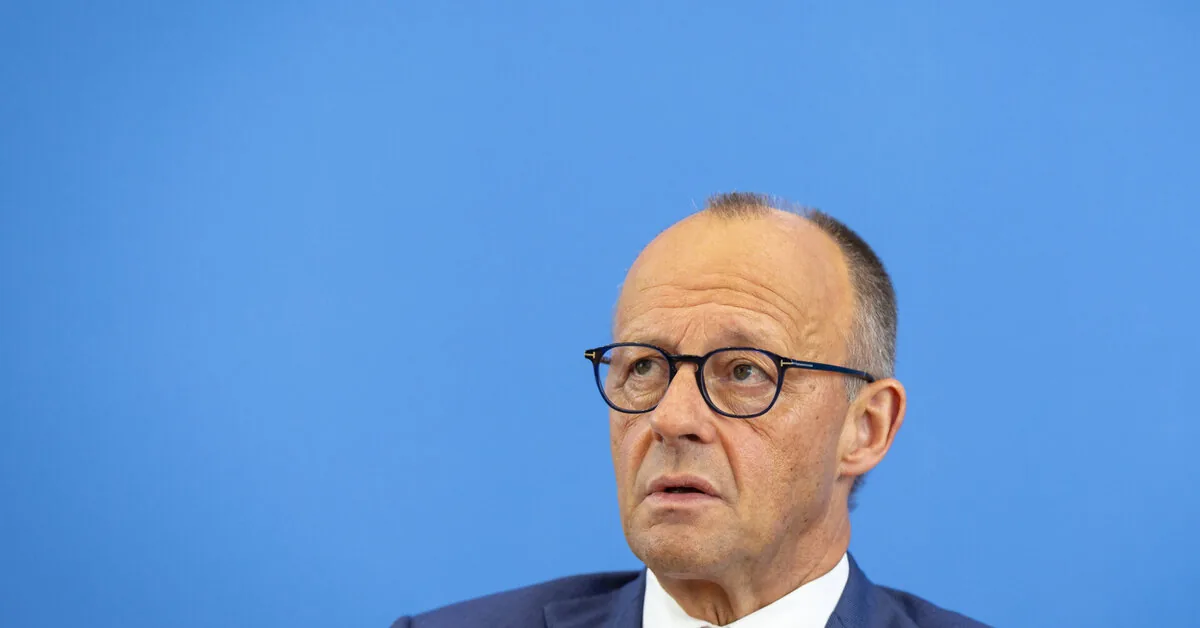
“The election campaigns are just beginning,” said conservative F. Merz, whose political program’s main goal is to fight the far right.
“I remain convinced that we will succeed in preventing AfD from securing a parliamentary majority in any of these three states,” F. Merz said at the annual summer press conference.
“I will maintain this optimism until election night,” he said.
F. Merz, whose own ratings have fallen as the government struggles to revive Germany’s sluggish economy, based his campaign on promoting economic growth and stricter migration control.
The seventy-year-old conservative claimed that achieving these goals will stop the far-right AfD, which he called a threat to German democracy.
F. Merz defended his work on Wednesday despite the slow pace of reforms and the ongoing stagnation of Europe’s largest economy.
“The overall picture is positive,” said F. Merz, stating that his coalition government “has gained momentum despite some criticism.”
Read more Tragedy on a US cruise ship: a person who fell overboard died
“We are fulfilling our commitments and understand the scale of the tasks ahead,” said F. Merz.
AfD has long been strong in the former communist East Germany territory, which includes Saxony-Anhalt and Mecklenburg-Western Pomerania.
F. Merz’s Christian Democrats currently lead a broad coalition government in Saxony-Anhalt.
The Social Democrats, F. Merz’s center-left partners in the national coalition, have continuously governed Mecklenburg-Western Pomerania since the fall of communism and German reunification in 1991.
All other German political parties have refused to cooperate with AfD – this policy is known as the “firewall.”
The Chancellor said he “likes to visit the East often” and that he aims to “convince the people living there of what we consider right” matters.
Read more Keir Starmer said goodbye to the UK Parliament and promised support to his successor