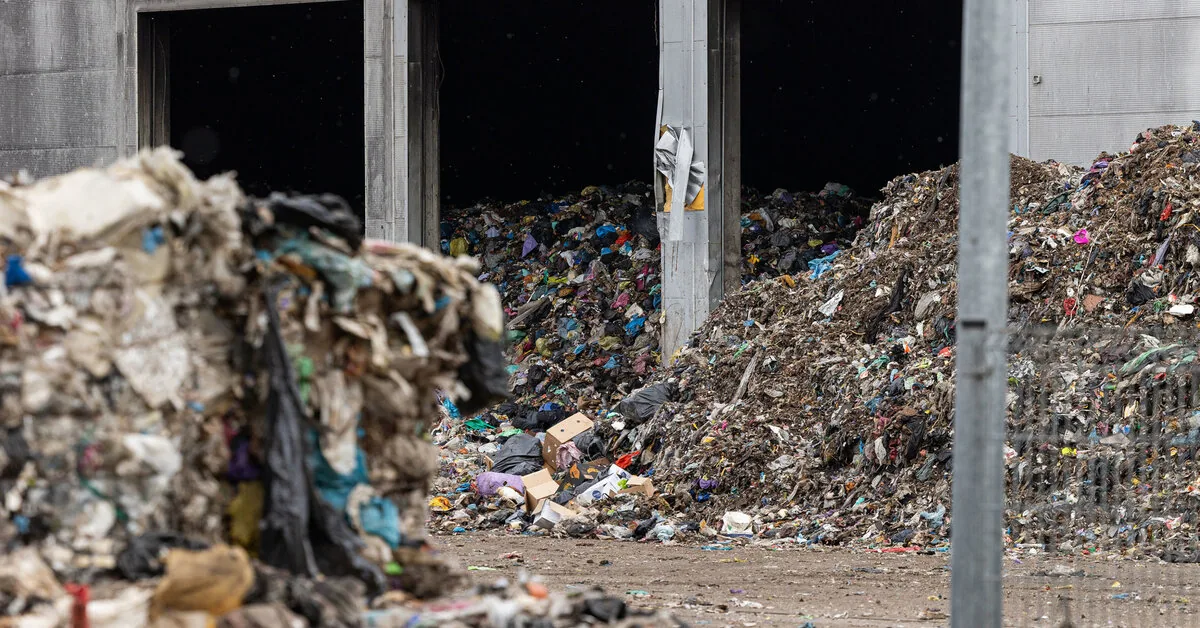
In the spring of 2025, a fire at UAB “Energesman” mechanical biological treatment facilities changed the management of mixed municipal waste in the Vilnius region. The waste management facilities have not yet been fully restored, so the sorting and management of mixed municipal waste is still carried out under difficult conditions.
Read more Berlin resident accused of drugging and raping 14 women
About 500–600 tons of municipal waste are collected daily from the Vilnius region (Vilnius city, Vilnius district, Elektrėnai, Šalčininkai district, Širvintos district, Švenčionys district, Trakai district, Ukmergė district) from mixed municipal waste containers. They are transported to UAB “Energesman” waste management facilities, where secondary sorting is carried out. During this process, additional recyclable waste not sorted by residents is separated from the mixed municipal waste stream – glass, plastic, paper, electronics, and other waste.
Considering the emergency situation declared in Vilnius city and the disrupted operation of UAB “Energesman,” since last week part of the mixed municipal waste collected in Vilnius city has been transported to the Kazokiškės landfill.
Due to the current circumstances, environmental authorities invite residents to contribute to managing the situation in the Vilnius region. Waste generated at home should always be sorted carefully and responsibly, but this is especially important during this period. The more waste is properly sorted, the less mixed municipal waste will enter the waste management facilities. This will help ensure smoother waste collection and management and contribute to reducing environmental pollution.
Read more After being detained, Putin’s former rival spoke out: «I wouldn’t last 15 days»
“The emergency situation shows that waste sorting is not just a daily habit – it also determines how effectively the entire waste management system operates. Every resident today can contribute to reducing its load by choosing to sort waste responsibly,” says Eglė Paužuolienė, acting director of the Environmental Protection Department.
How can you contribute to smoother waste management?
- Plan your purchases and food consumption to generate as little food waste as possible. If possible, compost food waste or sort it according to the rules established by your municipality. This waste, when placed in mixed municipal waste containers, quickly decomposes, emits unpleasant odors, contaminates other waste, and complicates further sorting.
- Never throw batteries, accumulators, and electronic waste into mixed waste containers. Improperly disposed of, they can cause fires at waste management facilities and contaminate the environment with hazardous substances. You can return portable batteries and accumulators for free at their points of sale, place them in special battery collection containers, or deliver them to bulky waste collection sites. Waste can also be handed over to legally operating waste managers. Detailed information can be found in the memo – “Electronics, batteries, and accumulators.”
- Sort paper, plastic, metal, glass, and packaging waste into designated containers. Only empty packaging should be placed in packaging containers; there is no need to wash them – just empty them. Sort glass packaging without caps or lids, and do not leave paper contaminated with grease or food in paper containers.
More information on how to properly sort various types of waste can be found in the Environmental Protection Department memo – “Sorting of secondary raw materials.”
- Deliver mattresses, tires, furniture, plumbing equipment, construction waste, and other bulky items to bulky waste collection sites – they do not belong next to containers or in mixed municipal waste containers. Consider giving items still suitable for use for reuse. More detailed information about the possibilities of handing over various bulky waste can be found in the Environmental Protection Department memo – “Waste disposal.”
The memos also contain useful links:
- Item sharing stations – places where you can leave items still suitable for use and give them a second life.
- Map of bulky and green waste collection sites – residents can dispose of a specified amount of bulky waste free of charge at these sites.
- Before handing over waste, make sure the waste manager operates legally. You can check this in the Waste Management Sites list (GPAIS). Search instructions can be found here – ATVR public search instructions.
By sorting responsibly, residents help reduce environmental pollution, the risk of fires at waste companies, and preserve valuable raw materials for recycling.
Read more Ukraine took action to restore order in the assault battalions – appoints a new commander