









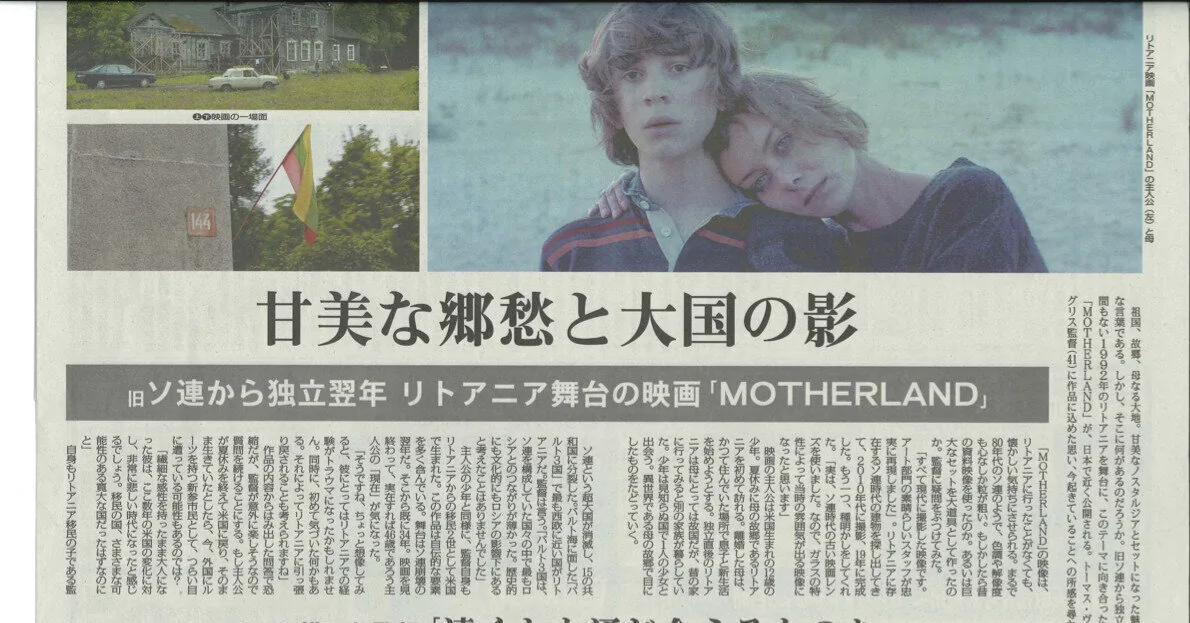
The film simultaneously premiered in as many as 20 Japanese cinemas – one of the greatest achievements in the history of independent Lithuanian cinema.
Read more Very restless night in Russia: at least 350 drones flew towards Moscow, an oil depot is on fire
A film worth waiting for: universal is what is personal
T. Vengris’s film journey to Japan began back in 2019, when it was noticed and acquired by one of Japan’s largest independent film distributors, “Uzumasa,” at the prestigious Busan Film Festival (South Korea). Although the premiere was planned six years ago, the global pandemic halted those plans. However, the Japanese distributors did not give up – they preserved and believed in the film for so long until they finally decided: now is the perfect time for “Homeland” to reach Japanese audiences.
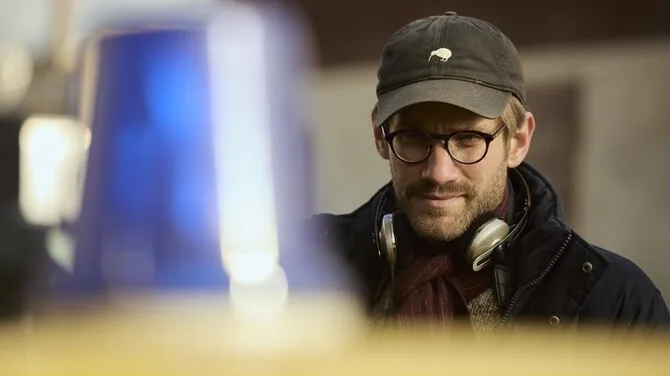
“This film was very personal to me, so it is incredibly gratifying to see that it can touch people in a completely different corner of the world. It once again confirms universality – that we are more alike than different, and the emotions experienced by the characters are understood regardless of country or historical context,” says the US-raised director.
According to Miyuki Sato, a representative of the Japanese film distribution company “Uzumasa,” “Homeland” began screening in 20 arthouse cinemas across Japan – from northern to southern regions. The first screenings took place at “Theatre Image Forum” in Tokyo and “Theatre Seventh” in Osaka. It is planned that if there is audience interest, the list of cinemas will be expanded.
“This year in Japan feels like a ‘Lithuanian moment’: books about your country are being published, a highly popular M.K. Čiurlionis exhibition just took place, and interest in Lithuania is growing. Moreover, with the war in Ukraine, the Japanese are seeking to understand the history and present of the Baltic countries anew through personal, painful experiences,” says M. Sato.
Universal themes and visual talent
Gabija Čepulionytė, Lithuanian cultural attaché in Japan, notes that the Japanese audience, having never lost their statehood, tries to understand global cataclysms through the histories of other countries. “Homeland” raises universal questions about identity that resonate even in a culturally distant country like Japan,” says G. Čepulionytė, who attended the Japanese film premiere.
According to the diplomat, cinema in Japan is an important and popular art form, and alongside the major European film countries, the works of smaller countries are gradually making their way.
Read more Zelensky reacts to the attack on Odessa: Russian leadership has lost its mind
Japanese film critics especially highlighted Tomas Vengris’s visual sensitivity in the national press. After the first screenings, positive reviews poured in about his “exceptional cinematographic talent” and ability to convey complex political shifts through a child’s perspective. The Japanese also lavished compliments on the captured beauty of Lithuanian nature in the film – surrounded by Tokyo skyscrapers, they were particularly moved by the Lithuanian sky space.
The film director says that after the screenings, Japanese journalists asked him deep questions about patriotism, nationalism, and what it means to be Lithuanian in the modern world: “Honestly, I probably gave more interviews than when I presented the film in Lithuania.”
The connection between “Homeland” and “Barakuda”: “Now I want to blow something up”
T. Vengris welcomes the success of the Japanese premiere while already living in the mood of his upcoming film “Barakuda.” Interestingly, the distribution process of “Homeland” became the seed for the new crime film and brought the director together with producer Emilija Sluškonytė. At that time, the Kaunas native was working in the “Homeland” distributors’ team in Lithuania (“ACME Film”). Having seen the film before the official premiere, she invited the director for coffee.
“We chatted about what kind of films I wanted to make next. I said I was still drawn to strong character dramas, but after ‘Homeland’ I wanted something faster, more intense. I remember half-jokingly saying, ‘Now I want to blow something up.’ Emilija’s eyes lit up, and just a couple of hours later I found a story description in my inbox, then called ‘Mafia Widow.’ That’s how our collaboration began, which turned into ‘Barakuda,'” recalls T. Vengris.
While in “Homeland” T. Vengris explored the euphoria and disappointment of the beginning of independence and deconstructed the feeling of nostalgia, in “Barakuda” he dives into much darker layers of the 1990s – the underworld of Kaunas crime, revealing the true image of the mafia through women’s eyes and showing the real cost of violence and paranoia.
The main roles in the film “Barakuda” were played by Gerda Čiuraitė (Loreta), Martynas Nedzinskas (Mongol), and Šarūnas Datenis (Doctor). The drama, telling the story of Loreta Gedvilaitė, the widow of Rimantas Ganusauskas-Mongol, who disappeared without a trace and belonged to the Doctors group, fighting for dignity, will reach Lithuanian cinemas in early 2027.
Read more FIFA boss who organized a record championship seeks further expansion: «We must give a chance»


