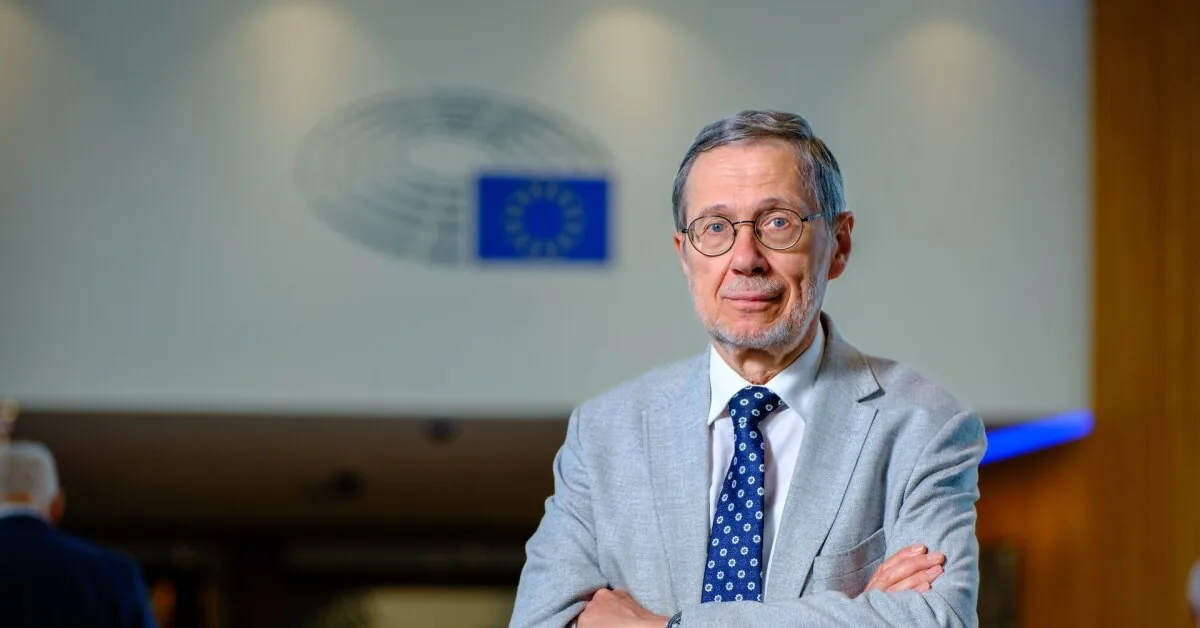





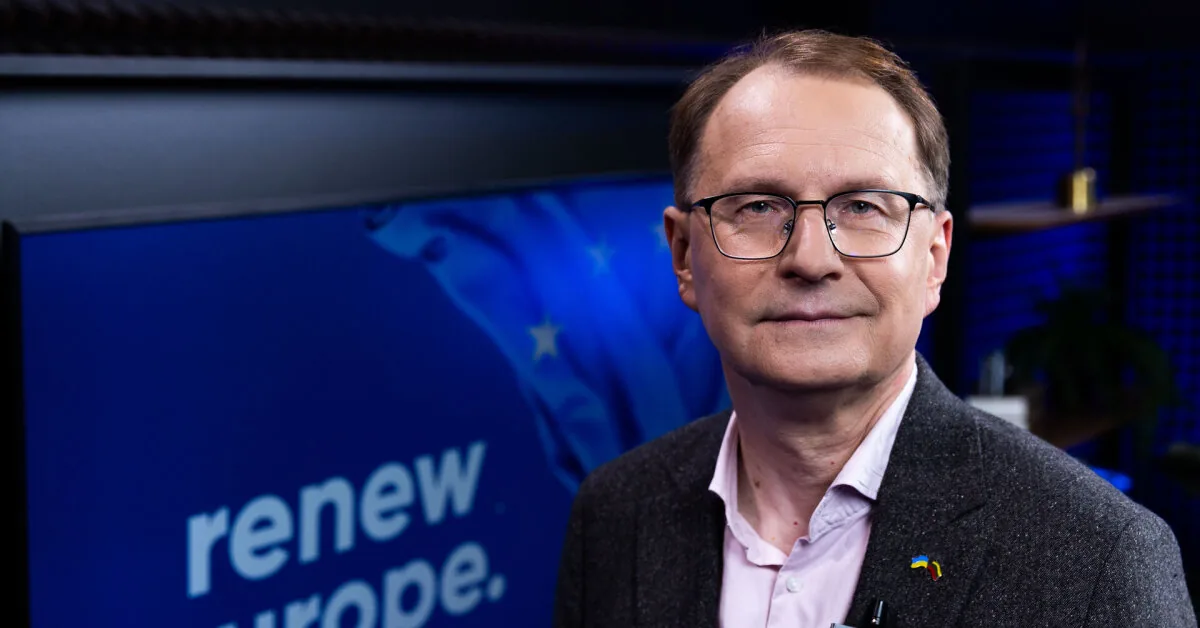
As a member of the liberal Renew Europe group, we primarily expected a clear and actionable plan. Europe today lacks not so much talent or resources, but unity and political will to turn its ambitions into concrete results.
Read more The Riflemen’s Union responded to the case of the rape of a 15-year-old and the convicted person
The main message of the speech was clear: only a strong and independent Europe can ensure the true sovereignty of its member states, including Lithuania. However, Europe’s independence cannot be built by abandoning its values – they must remain the foundation of our actions.
This theme was repeated when discussing security, support for Ukraine, energy, competitiveness, migration, and technology regulation. The speech covered many of the most important issues on the European political agenda, but concrete answers were not always sufficient.
I would highlight seven key points.
1. European security: new mechanisms will not replace political will
One of the most significant new proposals in the speech was to create a European crisis response mechanism that could complement the consultations provided for in NATO’s Article 4. If one country faces a serious threat, EU countries could quickly convene and coordinate a joint response.
I have no illusions that such a mechanism alone would fundamentally change Europe’s security situation. However, in a world where we can no longer be sure of Donald Trump’s US commitments to European security, it is natural that the EU is gradually seeking its own security mechanisms.
I believe this is the right direction. Still, the real value of the initiative will depend on the specific details: in which cases the mechanism would be activated, how quickly decisions would be made, and what real actions member states would commit to taking.
The Commission President also proposed implementing the idea of a European Security Council, which would allow broader cooperation including not only EU states but also Ukraine, the United Kingdom, Norway, and Canada.
However, new institutions alone will not be enough. Europe must strengthen its defense industry and the European NATO pillar much faster. More joint investments are needed in air and missile defense, drone detection and neutralization systems, ammunition, and the capacity to produce all these in larger quantities within Europe itself.
Therefore, the intention to jointly develop a new missile defense system “Freyja” with Ukraine, somewhat similar to the American “Patriot,” is important. Such projects could reduce dependence on external suppliers and help utilize Ukraine’s defense industry experience and innovations. Equally important is tightening sanctions on Russia and closing their loopholes.
We must not only support Ukraine but also integrate it into the future European security architecture. It should become part of the European Defense Union from its inception. This could be one of the first real stages of Ukraine’s integration into the EU.
Unfortunately, the speech did not include a clear and bold call to admit Ukraine to the European Union as soon as possible.
2. Canada: a new partnership perspective with democratic states
One of the most interesting moments of the speech was U. von der Leyen’s proposal to open the way for Canada to become the first associate member of the European Union.
According to current EU treaties, full membership is only envisaged for European countries, but this does not prevent seeking new forms of closer economic, political, and security cooperation.
This initiative is important in a broader geopolitical context. If we want to counterbalance the influence of authoritarian states, we must strengthen partnerships with democratic countries, and Canada is a natural partner for such cooperation, especially regarding transatlantic security, trade, and the Arctic region.
3. Energy: independence must also mean lower bills
Europe has already paid a huge price for dependence on imported fossil fuels, so the energy transition is not only a climate policy issue but also a matter of our security, economic competitiveness, and strategic independence.
U. von der Leyen reiterated the goal to increase the share of electricity in final energy consumption to 46% by 2040. This is one way to reduce Europe’s costs for fossil fuel imports – potentially up to 260 billion euros per year.
Europe needs more affordable clean energy produced within Europe – from renewable sources, nuclear energy, biomethane, and other sources.
However, increasing energy production alone will not be enough. Large investments are needed in electricity grids, energy storage, and interconnections between member states.
Read more For Valdas Adamkus, Aidas Ardzijauskas started running across America
Finally, the true measure of this policy’s success will not only be how much we reduce dependence on fossil fuels but also whether the new European energy system ensures lower bills for residents and competitive energy prices for our industry.
4. China: Europe chooses to reduce strategic dependencies
On the issue of relations with China, U. von der Leyen recalled a telling figure: the EU’s trade deficit with China amounts to one billion euros per day. The Commission President stated that Europe will use available tools to balance these relations.
It was also proposed to strengthen European cooperation in critical raw materials, including stockpiling. This is especially important for electric vehicles, batteries, clean energy, and other industries whose supply chains depend on a limited number of suppliers.
This part of the speech is an important message to the “understanders” of China operating in Lithuania, who seek ways to normalize relations with Beijing and return to the previous model of relations. Meanwhile, the European Union is moving towards reducing strategic dependencies and establishing equal economic relations.
5. Migration: all EU external borders are Europe’s borders
The Commission President clearly emphasized that all EU external borders are Europe’s borders. This is especially relevant for Lithuania, which has already experienced the Belarusian regime’s organized instrumentalization of migration.
U. von der Leyen announced the intention to create a new European crisis response mechanism for cases where mass migration flows are deliberately organized or used as a means of political pressure. This would allow temporarily more flexible application of usual procedures.
It was also proposed to strengthen Frontex, especially to accelerate the return of illegally staying persons, and to launch a youth skills and employment initiative in the Mediterranean region aimed at reducing illegal migration flows.
Specific proposals will still need to be analyzed, but it is important that the instrumentalization of migration is seen as a broader security problem. The EU’s response cannot be limited to border protection alone. We also have diplomatic, economic, and other tools to respond to deliberately organized hybrid pressure by states.
6. Child protection online: rules must not be set by technology companies
One of the most important highlights of the speech was child protection in the digital space. Finally, the discussion is moving towards concrete restrictions on the use of social networks.
But an even more important shift is in the approach. It is not the big technology companies that should dictate the rules to society – they themselves must prove that their services are safe. Responsibility for children’s safety must lie not only with parents but also with platforms whose business models are often based on keeping users’ attention as long as possible.
The addiction-promoting design of platforms affects not only children. Therefore, the upcoming Digital Services Act proposal in autumn, which aims to address broader problems of manipulative digital service design, is also significant.
However, the essential test of the new restrictions will be their compatibility with privacy protection. Age verification apps and other authentication tools must be reliable, secure, and not require excessive personal data. Public trust in the entire system will depend on this.
7. Europe needs political will, not another list of ambitions
The value of many ambitions expressed by U. von der Leyen will be determined by their implementation. The significance of security mechanisms will be defined by concrete commitments of states, the impact of the energy transition on prices, and the ability of technology regulation to ensure security without sacrificing privacy.
But her broader message is correct – when talking about Europe’s future, we are really choosing not between the supposedly inevitable decline of Europe and a radical proposed return to an idealized past. The real choice is between a Europe that acts together, invests in its strengths, and defends its interests itself, and a divided Europe for which more and more decisions will be made by others.
Pro-European radicalism is necessary to realize an optimistic vision of Europe’s future. In other words, what I call the hard line of liberal democracy.
Europe lacks neither resources nor talent. It needs more unity and political will. Only a strong, independent Europe faithful to its values can ensure Lithuania’s security and sovereignty.