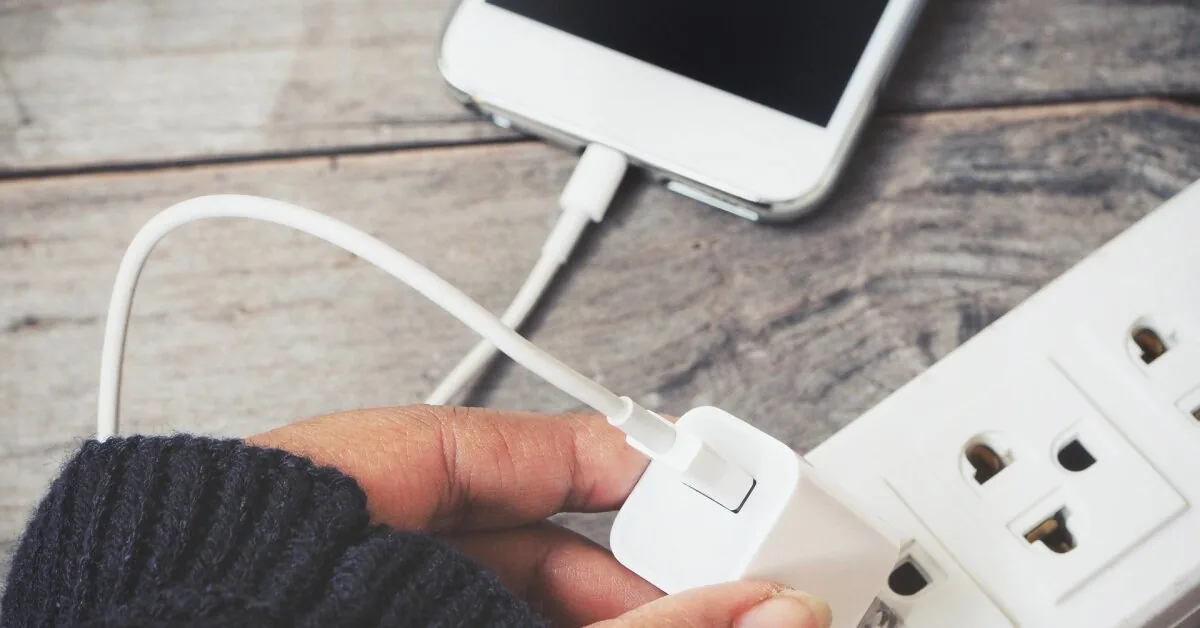
To avoid this, we often resort to various battery-saving measures that are no longer relevant in the era of the latest technologies. So what are the most common myths related to battery charging and longevity, how does battery usage change in foldable phones, and how can you really extend the time between charges?
Is it necessary to close all apps?
Many people start saving their smartphone battery with simple actions like constantly closing apps. However, as Eglė Tamelytė, Samsung’s communications manager in Lithuania, states, modern smartphones manage background processes automatically and efficiently pause unused apps.
“Some habits we still associate with battery saving come from much older mobile phone times. The software of modern devices is adapted to the pace of users’ lives and the use of many apps, so it manages many processes independently.
Of course, you can always check in the phone settings which apps actually consume the most energy and restrict their background activity if necessary,” advises the speaker, adding that games, navigation, video recording and editing, content streaming, or using the phone as a mobile hotspot usually require the most resources.
When the battery really ages, it is not necessary to manually limit individual phone functions. In such cases, you can enable power saving mode, which automatically reduces energy consumption and helps maintain the remaining charge longer. And if needed, energy can also be shared – the wireless power sharing feature allows charging another compatible device from the phone, such as a smartwatch or headphones.
Does charging in the car and at night harm the battery?
Other users try to reduce battery drain by strictly limiting charging habits, hoping to avoid its wear. It is important to know that the battery life cycle is calculated based on the total capacity used, not on how many times you plugged in the charger. So short 10–20 minute charges several times a day do not damage the battery by themselves.
In other words, charging the phone in the car is completely safe, and even a short trip, especially if the car uses appropriate equipment and integrated fast wireless charging, can be a great opportunity to replenish energy reserves.
Read more Donald Trump: Yemeni Houthis asked not to interfere in the conflict
“However, it should not be forgotten that navigation, mobile data, active screen, and charging at the same time increase the device’s load. If the phone is also left in direct sunlight, for example on the car dashboard, its temperature can rise significantly. It is precisely the long-term heat exposure that most accelerates the chemical aging of lithium-ion batteries,” explains E. Tamelytė.
Those who want to protect the battery also often avoid charging the phone at night. However, modern smartphones, upon reaching the set charge level, intelligently manage the further process, so the battery is not continuously “overcharged.” Special protection functions are integrated into devices that adapt charging to individual user habits or automatically limit the maximum charge level.
What really drains the device fastest?
Another common myth is related to foldable phones. It is believed that having two screens causes the battery to drain twice as fast. In fact, the biggest impact on energy consumption is not the existence of the second screen itself, but the intensity of its use. For example, the Galaxy Fold8 Ultra, with a 6.5-inch outer and 8-inch main screen and a 5,000 mAh battery, will not drain faster than a standard phone under normal use. This myth arises because the large foldable screen simply provides more opportunities to perform multiple tasks simultaneously. When the phone is unfolded, several apps are actively used at once, video content is watched, or games are played, which requires more energy.
A less noticeable but very important factor is a weak mobile signal. When the signal is poor, the phone uses maximum resources searching for the network and trying to maintain a stable connection. Finally, faster discharge is also contributed to by natural wear, which cannot be completely avoided: lithium-ion batteries chemically age over time and gradually lose part of their original capacity.
“The main purpose of a smartphone is to make our daily life easier, so we should not become victims of constant battery-saving compromises. Today, energy use is also optimized by artificial intelligence, so the phone can perform part of this work itself. Instead of unnecessarily turning off smart functions or fearing to charge the device when needed, it is better to take advantage of the phone settings and enjoy the freedom technology provides,” summarizes the Samsung representative.