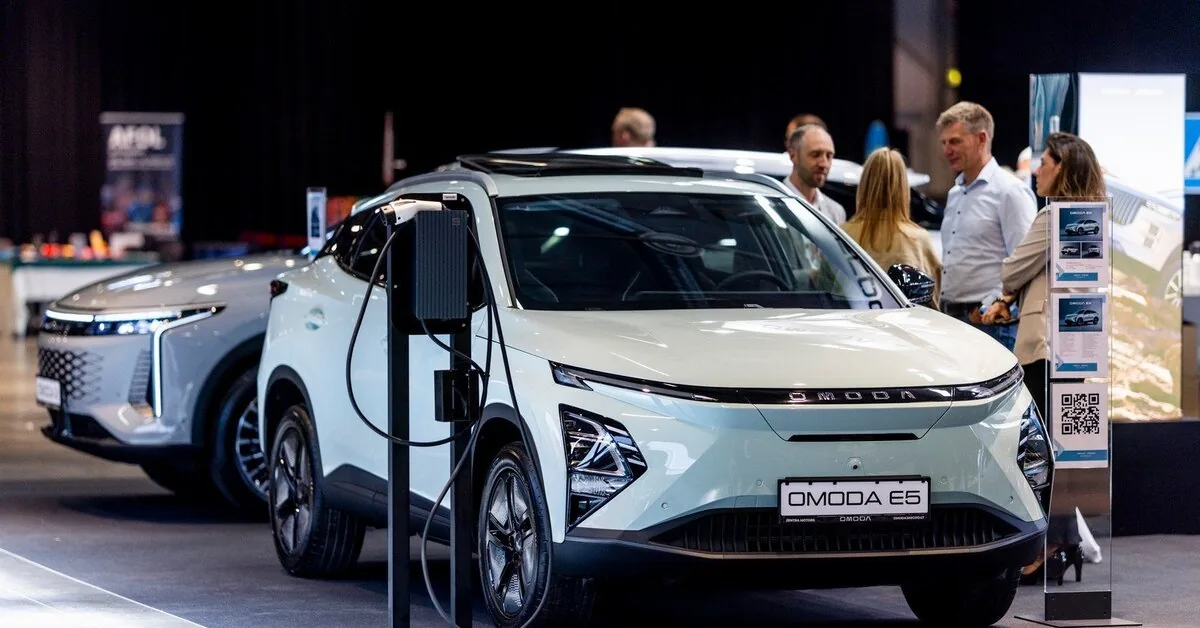
The opportunity to receive additional financial benefits for charging an electric car at home has sparked residents’ interest in the DAEI system this year. However, a problem is also emerging, which some drivers only learn about after choosing a aggregator – connecting to its system may change the operation of the charging station and make functions that were used daily until then unavailable.
Read more Unexpectedly canceled match of Fenerbahçe coached by Şaro
“Recently, there has been much discussion in the DAEI market about which aggregator will offer a few cents more per kilowatt-hour. From our experience, I see that another question should be just as important to a person – what will happen to my charging station when I connect it to the aggregator’s system? We are receiving more and more people who inquire about this only after noticing that some previously used functions no longer work,” says Paulius Gūžys, co-founder of the energy solutions company “Įkrautas”.
DAEI opened a new opportunity for electric car drivers
DAEI – units of accounting for fuels from renewable energy sources – has been operating in Lithuania for several years, but this year it became relevant to a much larger share of private electric car drivers.
With the updated DAEI system administration procedure coming into effect on February 14, 2026, aggregators gained the opportunity to represent owners of private electric car charging access points and declare the electricity supplied to electric cars through them in the system. Lithuanian legislation provides the possibility to grant DAEI accounting units also for electricity from renewable sources supplied to electric cars through private charging access points, including those used in households.
Practically, this means that a resident charges their electric car at home as usual, and the aggregator, under agreed terms, accounts for the appropriate charging data, declares the amount of energy, and administers the generation of DAEI units. Thus, regular electric car charging can create additional financial value.
“The DAEI idea itself is undoubtedly beneficial for residents or businesses. They charge the electric car at home or at work anyway, and now the same charging can generate additional benefits. It is important that when choosing an aggregator, a person evaluates the entire offer, not just the compensation for the accumulated energy,” says P. Gūžys.
What can change when choosing a DAEI aggregator?
According to P. Gūžys, the biggest practical problem arises because different aggregators and charging stations from different manufacturers are technically integrated differently. Therefore, before signing a contract, it is important to clarify how the data required for DAEI accounting will be obtained and whether the usual operation of the charging station will change due to the chosen technical solution.
Depending on the specific equipment and integration method, the manufacturer’s app, remote control of the station, charging history, scheduled charging settings, smart charging functions, or dynamic power management may be affected.
“People often choose an electric car charging station precisely because of these functions. For example, they want to set the car to charge at certain hours, see the history on their phone, or automatically manage power according to the home’s electricity consumption. Therefore, it would be unfortunate to lose functionalities you have already paid for when buying the station just for a few cents difference in the DAEI offer,” explains P. Gūžys.
Read more Did you buy this puree for children? Hurry to take it back
Five questions worth asking before signing a contract
According to P. Gūžys, the user does not need to understand technical integrations. It is enough to ask clear answers to a few questions before choosing an aggregator: will the manufacturer’s app continue to work, will the charging scheduling and remote control functions remain, will the charging history be preserved, will dynamic power management and smart charging continue to work, and how will the aggregator obtain the data required for DAEI accounting.
It is especially important to immediately specify the exact manufacturer and model of the existing station to the aggregator. The fact that one integration works smoothly with one manufacturer’s equipment does not mean it will work identically with another.
Therefore, the simplest advice for those wanting to connect to a specific DAEI aggregator is – before signing the contract, ask the aggregator directly: will I be able to use my station exactly as I do today after connecting? If the answer depends on the station model, ask them to check your specific equipment. Five minutes before concluding the contract can save a lot of time later.
Will the aggregator see where you drive?
Along with the popularity of DAEI, questions about data arise. According to the co-founder of “Įkrautas,” it is important here to distinguish between electric car usage and energy accounting – the purpose of the DAEI system is to account for the amount of electricity supplied to the electric car that meets the requirements. Legislation provides that the information in the DAEI system is not public, and the system operator must ensure the security and confidentiality of the data contained therein.
“People sometimes imagine that by connecting to DAEI, they give access to information about where they drive or where their car is. In our case, this is not necessary. For DAEI accounting, we only use the charging data necessary to calculate the kilowatt-hours supplied to the electric car through the charging station and to administer the system. A person’s travel routes or location are not needed for this. Moreover, the collection of private data is strictly regulated by Lithuanian laws, and violations carry serious legal sanctions,” emphasizes P. Gūžys.
DAEI is relevant to both residents and businesses
“Įkrautas” is also a DAEI aggregator and provides the service to both residents and legal entities. The company accounts for the electric car charging that meets the requirements, administers the DAEI process, and transfers the accumulated value to the client according to the chosen offer’s terms.
According to P. Gūžys, the growing DAEI market is a positive change for the entire electromobility sector because drivers gain another economic incentive to charge their electric cars using electricity included in renewable energy accounting. At the same time, growing competition means that consumers should compare not only tariffs. Competition among aggregators is healthy and beneficial for the client. The most important thing is that in the race for a few cents, we do not lose the most important question for the person – how will all this work in my daily life? Therefore, a good DAEI offer is one that creates additional value and at the same time allows the person to continue comfortably using their equipment.
Read more Moldovan MMA fighter handcuffed for attempted attack on Russian general