Here, “Prienų vandenys” has started to combine individual sewage systems into shared ones on the outskirts of a couple of towns. This saves everyone’s time and costs less money than waiting for various support programs.
Read more On Monday – in the office, on the weekend – in training: a shooter learning to save lives
A similar trend is seen in Šilutė, where it is planned to renovate water supply and sewage systems annually in one gardening community. “Laying sewage lines in narrow streets of gardening communities is difficult, so we install pressure sewage networks for domestic sewage collection,” says Martynas Kainovaitis, deputy director of “Šilutės vandenys.” “This way, residents receive the service faster, and there are fewer inconveniences due to closed passages.”
“Our salvation is a directional drill,” names another solution for faster laying of sewage networks Vytautas Jašinskas, director of “Sūduvos vandenys.” “The directional drill has essentially changed the organization of engineering network repair and construction works.”
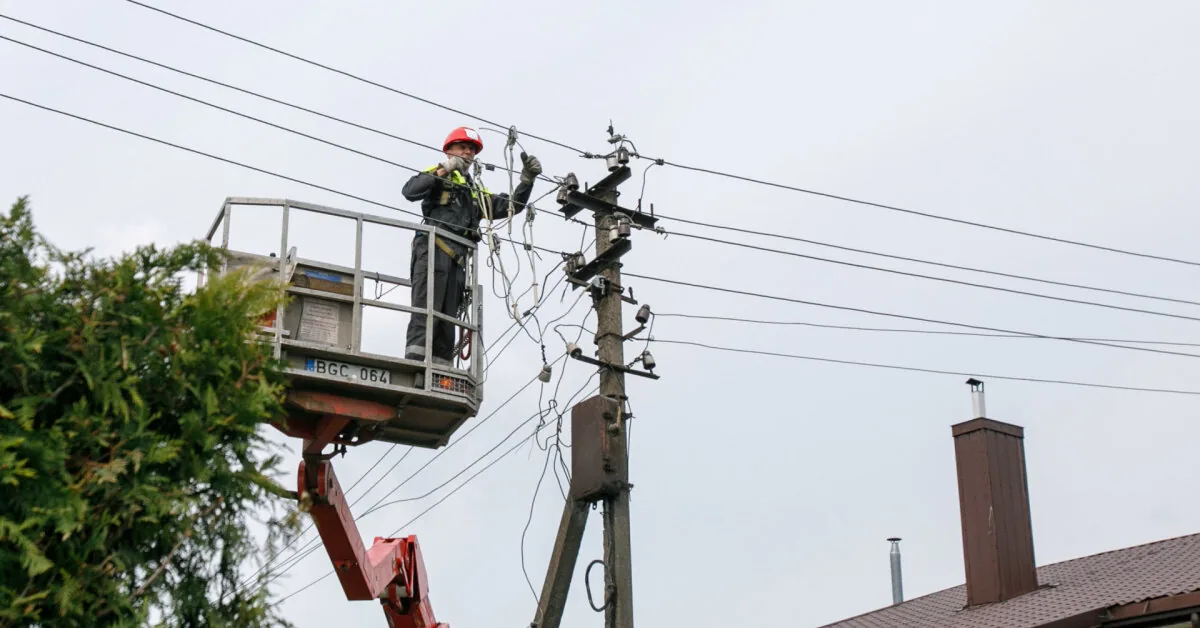
According to V. Jašinskas, the biggest advantage of directional drilling technology is the ability to lay or renew pipelines without digging long trenches. This way, work is done faster, traffic is less disturbed, the environment is preserved, and inconveniences are reduced.
“In a few years, we have renewed or newly laid more than 12 kilometers of engineering networks this way. We performed most of the work ourselves, which allows us to reduce costs by about half compared to the rates offered by contractors,” notes V. Jašinskas.
The saved funds are directed by the people of Suvalkija to further infrastructure renewal. “Every year we make a plan of priority projects, so gradually problematic areas that previously could not be fixed due to limited funding are being addressed,” shares V. Jašinskas.
Specialists of “Giraitės vandenys,” a company providing water management services in Kaunas district, notice growing interest from newcomers to settle in those settlements where water supply and sewage networks have already been renewed and treatment facilities modernized – such as Užliedžiai, Giraitė, Voškonys, Eigirgala, or Varluva. It is planned to invest 10-15 million euros in the next 2–3 years.
Similar local “migration” trends are observed in Pastrėvys, located on the shore of Elektrėnai Lagoon. Sewage networks are already being laid here. There are simply no empty houses left in the village near Elektrėnai Lagoon – houses for sale quickly find new owners, and more and more young families choose to live here.
Pastrėvys is gradually becoming an attractive place to live between Vilnius and Kaunas. Young families seek to settle where it is both convenient and civilized. They look more for plots where water supply or sewage network pipelines are laid.
“Many creative solutions can be found to connect more residents to common water supply and sewage networks,” states Eimantas Kirkliauskas, president of the Lithuanian Water Suppliers Association (LVTA). “Naturally, as EU funding decreases, unconventional solutions need to be sought. In narrow garden streets, pressure and vacuum sewage networks can be installed; they do not need to be laid in deep and wide trenches. These pipelines can also be installed by closed drilling methods, thus preserving existing transport infrastructure.”
According to E. Kirkliauskas, a somewhat more complicated puzzle is how to transfer the existing water supply and sewage collection infrastructure of remote residential neighborhoods or gardening communities to water suppliers. This infrastructure must meet the suitability and necessity criteria specified by the Drinking Water Supply and Sewage Management Law – it must be registered in the real estate register and connected to infrastructure owned by the municipality or water supplier.
Moreover, its technical condition must meet the requirements set by the Construction Law and fall within the agglomeration boundaries or the municipality’s public drinking water supply area. The water management company should assess the impact of buyout on price increases or decreases. Another alternative is to install individual or group drinking water supply and sewage treatment facilities.
Read more In August, annual inflation in Latvia rose to 3.2%.