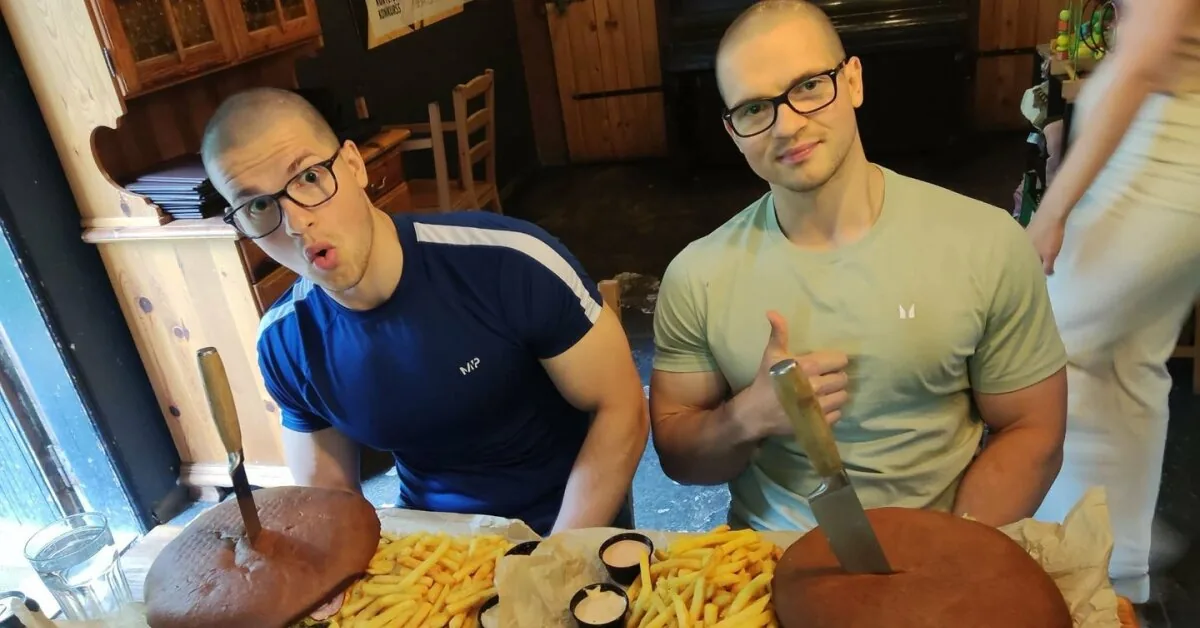
Tadas Alijošius sees it from both sides. In civilian life, he is a representative of the hospitality business, the founder of “Old Town Apartments” and the manager of “Tauragė Hotel.” The first family hotel in the center of Tauragė opened its doors in 2018, and today Tadas also manages a much larger hotel revived after reconstruction, according to a press release from the public organization “Šaulių Sąjunga.”
Read more Smartphones will no longer work as before: a popular feature will change in 2027
He describes his work much more simply – in the hospitality business, you need to take care of people. Or, as Tadas says, “give love to the guests.”
In the Lithuanian Riflemen’s Union, these skills take on a different meaning. Tadas is a rifleman of the 702nd Tauragė Juozas Kasperavičius Riflemen’s Squad, and one of the areas where he can apply his experience is logistics.
The decision was accelerated by the war in Ukraine
The Riflemen’s Union was not an unfamiliar organization to Tadas. His father has been a rifleman for many years, and so has his brother. Therefore, rifleman life, as he says, was always somewhere nearby. But the final push to join came with the large-scale Russian invasion of Ukraine that began in February 2022.
“The Riflemen’s Union has always been in my heart. My father has been a rifleman for many years, but I myself had not joined before. When the Russians invaded Ukraine in February 2022, I didn’t wait long – by March 11 I was already a rifleman,” Tadas recounts.

The war forced a different perspective on what until then seemed distant and theoretical. At the same time, a very practical question arose: if one day normal life stopped, how could I be useful? Tadas did not look far for the answer from what he already knows.
During a crisis, a hotel is no longer just a hotel
“Logistics covers many things. We have transport, equipment, resources. People need to be fed, housed, transported. It is a place where we can be useful with what we have and know,” he says.
This is where his civilian experience and rifleman activity meet most clearly. Managing hotels, Tadas deals daily with accommodation, catering, service organization, and people’s needs. The Tauragė hotel he currently manages is the second hotel run by their team in the city and much larger than the first.
Through the eyes of a rifleman, all this infrastructure looks different. “When you think about day X, you start to look at what you have and what you can apply – from shelters, transport, catering to water supply. What can I do? How can I be useful to my country, my city, my family, my community?” What on a normal day is just a car, building, kitchen, bed, or water supplies can become a resource someone desperately needs during a crisis.
The same skills – in completely different conditions
Tadas does not hide that he came to the Riflemen’s Union already carrying a significant amount of life and professional experience. But he has to learn how to use it in difficult conditions: “If you are a kitchen chef, everything is clear in the kitchen. But try to do the same outdoors, at night, in the cold or heat. Then the same skills look completely different.”

In his opinion, this is where one of the greatest values of preparation lies – it is not enough to know what you can do under normal conditions. You need to understand how you will behave when normal conditions disappear.
Exercises and training are designed for this. “We have many exercises, various courses from which we gain experience. There are people who have been in the Riflemen’s Union for many years, so we try to take every opportunity to learn from them,” Tadas says.
Read more Conservatives gathered at the congress will approve the local elections program
He himself has other experiences that have taught him to manage stress. But Tadas clearly distinguishes everyday stress from what a person would experience in the face of real danger. “When you play basketball or are in the mountains, your heart also races. But it is quite different if you get the first shot. It is very hard to prepare for war until you have experienced it yourself.”
Therefore, according to him, the experience of other people becomes especially important here: “You communicate with colleagues, talk with volunteers, freedom defenders, people who, as they say, have already smelled gunpowder. Their experience helps to better understand what might await.”

Tadas does not say that exercises can fully prepare you for war. On the contrary – his thought is much more down-to-earth: the more situations you have thought through, tested, and discussed in peacetime, the fewer things you will have to solve for the first time in a crisis moment. “You don’t learn much in one day. But a year passes and you see that something has definitely settled,” says Tadas.
Wearing a uniform does not mean everyone will have to take up arms
One of the stereotypes Tadas would like to dispel is that a person who joins the Riflemen’s Union will inevitably have to run around with a weapon: “Weapon handling is just one pillar on which the organization stands. There are others – medicine, information technology, drone units, logistics, food production. Don’t be scared by the uniform or the weapon you see somewhere.”
And the choice is much broader than it might seem from the outside – you can choose from more than 20 different specializations. Some people may be closer to drones or communications, others to medicine, logistics, information technology, catering, or another field where their existing knowledge and experience come in handy.
According to Tadas, in the Riflemen’s Union, a person who is more into computers than weapons can find a place, as well as someone who knows how to cook, work with information, create visual materials, organize transport, or provide medical assistance: “There are definitely many specializations. Everyone can choose according to their abilities and desires. The most important thing is to understand how you yourself can be useful.”
“This is your city, your family”
Speaking about volunteering, Tadas does not avoid humor. “If you want to be a volunteer, help, and not get paid for it – go ahead,” he laughs. But behind the joking sentence lies a very clear answer as to why he himself dedicates his time to it.

“This is your city, your family, your father, your mother. You love them. You don’t see it as some abstract defense of the country – you simply understand that you have to take care of what is yours and give your love to the country, family, community, and the whole environment,” says Tadas.
In his words, national defense is not something distant or abstract. It begins where a person lives – from their family, street, city, and the people they know. Perhaps that is why Tadas describes the Riflemen’s Union not only as an organization preparing for possible threats but also as a community of like-minded people: “Here you find like-minded people – a kind of patriots’ club. A community where you can come, share your skills, pass them on to others, exchange information, and love your country.”
In Tadas’s story, preparation for national defense does not start with a weapon. It starts with a very simple question: what can I give? In his case, the answer is to take care of people, house them, feed them, transport them, organize available resources. These are things he does in his professional life. Only in the Riflemen’s Union does he learn to value them through another prism – what all this would mean when help is needed not for a hotel guest but for his city and community.
Read more 78 thousand foreigners in Vilnius: the world will meet at one table in Bernardine Garden