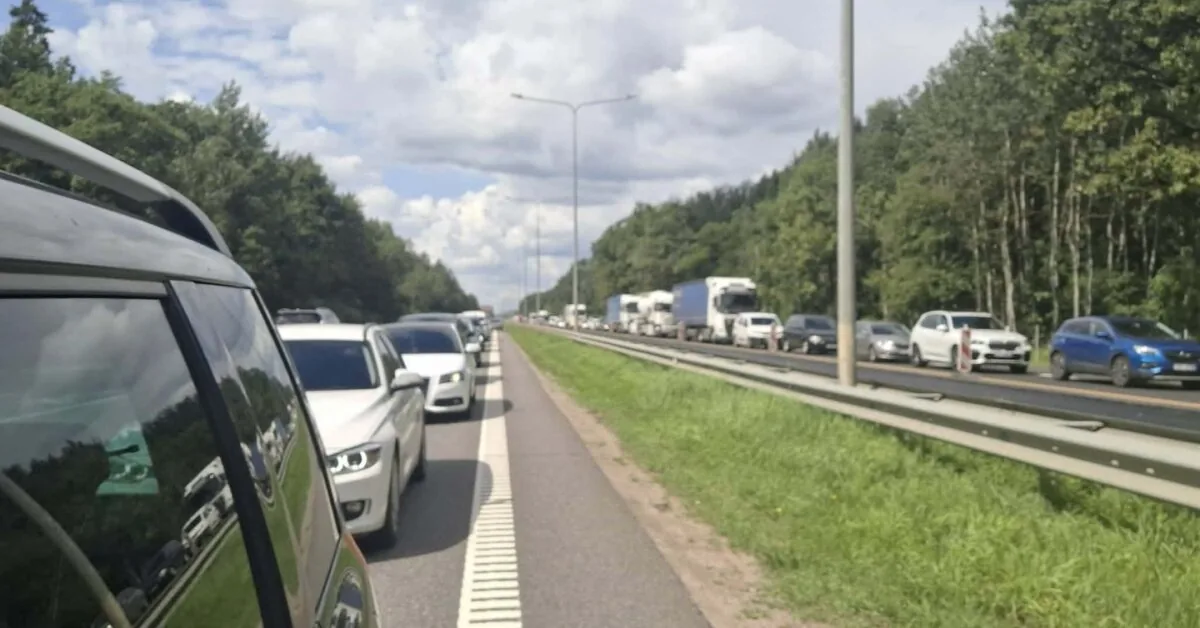
„Due to the raging storm, the most affected were car windows, roofs, engine hoods, and other upper body parts. We also recorded quite a few traffic accidents where drivers collided with objects that suddenly appeared on the roadway, such as broken tree branches or tops.
Read more Oil prices are rising
Such cases occurred not only on regional roads in the country but also on busy highways. This storm once again showed how fierce and unpredictable the forces of nature can be,“ says Giedrius Petrikas, head of the transport damage department at Lietuvos draudimas.
According to the expert, some residents ignored or underestimated the advance warnings about the approaching storm. As a result, many vehicles were left in forested areas, under trees, near bodies of water, or in rest zones where strong winds posed the greatest danger.
„When receiving a warning about an approaching storm, strong wind, or heavy rain, we usually first think about our homes, farms, gardens, but it is also worth remembering the car. Sometimes it is enough to move it to a safer place, cancel unnecessary trips, or simply not try your luck by crossing a flooded road section. Such decisions seem simple, but under exceptional and extreme weather conditions, they can help avoid significant damage,“ emphasizes G. Petrikas.
Assess where your car is located
According to the expert, one of the simplest preventive measures before a forecasted storm is to choose the safest possible parking spot for the car. When strong winds blow or a storm rages, vehicles should not be left near large trees, close to advertising structures, or other objects that strong gusts of wind can shake and topple.
„If possible, it is better to move the car to a place where there are no objects that could fall on it. The most dangerous, of course, are large trees and their branches – as the last storm showed, even trees that look healthy may not withstand strong winds and can damage cars when falling. When leaving a car in an open area, it is better to choose a higher spot to protect it from flooding by rainwater,“ notes G. Petrikas.
If the trip is not necessary, it is better to postpone it
When meteorologists warn about difficult weather conditions, drivers should not consider recommendations to avoid unnecessary trips as excessive caution. During a storm, traffic conditions can change very quickly, and strong gusts of wind, heavy precipitation, and reduced visibility make driving more difficult. Moreover, other drivers on the road may act unpredictably.
According to G. Petrikas, additional danger is posed by tree branches or other wind-blown objects on the roadway. Strong crosswinds can also unexpectedly affect the car’s trajectory, especially when driving in open areas, on bridges, or leaving shelter.
„If a trip can be canceled or postponed, it should be done when warnings about dangerous meteorological phenomena are issued. If driving is necessary, it is important to choose a safe speed, increase the distance to other vehicles, and be prepared for the fact that the road situation may be very different from normal conditions,“ says the expert.
The disaster strikes all cars equally
The damage expert also draws attention to another problem revealed after natural disasters – some damaged cars are not insured with voluntary comprehensive insurance. According to G. Petrikas, owners of older vehicles more often refuse such protection, but the age of the car itself does not protect it from the effects of natural forces.
„We notice that cars up to 10 years old are most often insured with comprehensive insurance, but age alone is not the main criterion. For example, well-maintained, technologically advanced, or luxury cars can still have high market value after 10 or 15 years, so insurance protection remains relevant for their owners,“ comments G. Petrikas.
Insurance practice shows that a fallen tree or other damage caused by a disaster can irreparably damage a car or cause very high repair costs. In such cases, losses often reach several or even tens of thousands of euros. In some cases, from an economic point of view, repairing the car becomes pointless.
The expert emphasizes that repairing modern cars is becoming more expensive due to cameras, radars, LED headlights, panoramic roofs, and other technologies. At first glance, even minor damage can require several thousand euros in repair costs.
„It still happens that drivers do not distinguish between different types of vehicle insurance. To have protection for your car against natural forces, theft, vandalism, and other risks – you should choose comprehensive insurance. Mandatory third-party liability insurance only covers damage caused to third parties during a traffic accident,“ says G. Petrikas.
A flooded road is not a place to test your car’s capabilities
Heavy rains pose another danger to drivers – streets and road sections that drivers usually navigate without problems can become flooded in a short time. G. Petrikas emphasizes that when approaching a water-covered area, one should not try to cross it without knowing the water depth and road surface condition.
„It is very difficult to accurately assess the water depth or whether the road surface is safe to drive on while sitting in the car. Trying to drive through a flooded section can cause water to enter the engine or the car’s electrical systems and cause significant damage. Moreover, the driver cannot see the road surface under the water – it may be damaged, washed away, or contain foreign objects. Therefore, the safest solution in such a situation is to turn around and choose another route,“ emphasizes the transport damage expert.
According to G. Petrikas, if the car has already entered deeper water and stalled, one should not try to restart the engine repeatedly, as this can further increase technical damage.
Prepare for possible electricity and infrastructure disruptions
The last storm showed that a natural disaster can disrupt not only traffic but also electricity supply, so before a forecasted disaster, it is worth ensuring sufficient energy reserves for the car. Drivers of internal combustion engine cars are advised not to wait until the fuel tank is almost empty, and electric vehicle owners should ensure sufficient battery charge in advance.
„Power supply disruptions can affect both gas stations and electric vehicle charging stations. On a normal day, an almost empty fuel tank or a low battery usually does not cause major problems, but under extreme weather conditions, the situation can change. Therefore, if a strong storm is known in advance, it is worth taking care of such seemingly simple details,“ says G. Petrikas.
Read more «Google Maps» dances to Trump’s tune: renamed Ontario lake