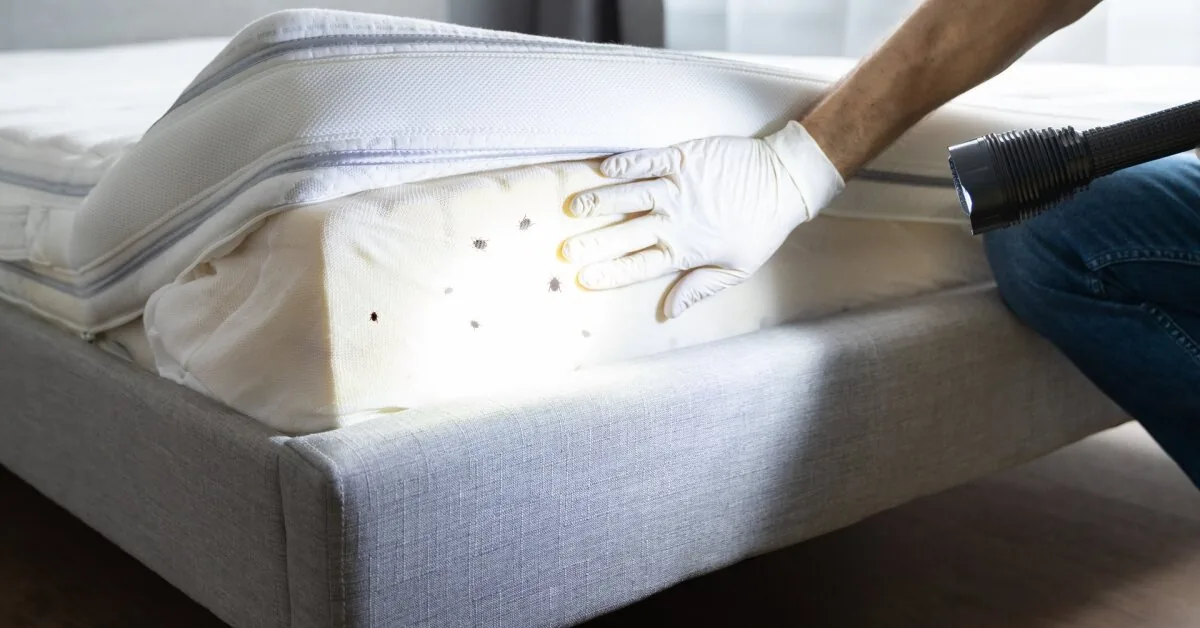
“Bedbugs have appeared in the rented apartment. We really don’t think the current tenants brought them – the people are tidy. One visit from a pest control company costs 100 Eur, and there have already been two visits. The apartment owner categorically refuses to pay.
Read more From A to Z: can you recognize car manufacturers from their model names?
After all, if the current tenants move out, the bedbugs will remain in the apartment and the problem will fall to other residents. What to do with the already paid 200 Eur and who should pay for further extermination?” – this was the question received by lawyer and mediator Raimonda Joskaudienė from a reader.
According to her, the owner’s statement “I will not pay” is not enough, but there is no automatic rule that the apartment owner always pays for all problems that arise in the rented property.
Legally, according to R. Joskaudienė, it is important to determine:
when and for what reason the bedbugs appeared, whether they were related to the condition of the apartment itself, the furniture in it, or the entire building, or whether they entered the property due to the tenants, their guests, travels, brought items, or other circumstances.
“The fact that people are tidy alone does not prove the cause of the bedbug infestation. The National Public Health Center (NVSC) indicates that bedbugs can enter homes with suitcases, used or antique furniture, they can be brought by guests, and their spread is favored by various cracks in floors, walls, and furniture. Bedbug bites can cause severe itching, swelling, disturb sleep, and negatively affect emotional well-being. Since these pests are difficult to eradicate, NVSC recommends contacting licensed pest control specialists,” emphasized the lawyer.
What does the Civil Code establish?
1. The owner must deliver and maintain the property suitable for use
Article 6.483, part 1 of the Civil Code states that the lessor must deliver to the lessee an item that corresponds to the contract terms and the intended purpose. Moreover, the lessor must guarantee that the item will be suitable for use according to its purpose throughout the rental period, not just on the day the keys are handed over.
Special provision Article 6.587 of the Civil Code also applies to residential premises rental: the lessor must deliver premises suitable for living to the lessee. The premises may be considered unsuitable for living if their condition poses a threat to the health or safety of the tenant or their family members. Therefore, a large, recurring bedbug infestation affecting residents’ health and sleep can be considered not a minor inconvenience but a significant defect of the residential premises.
2. The owner can be liable even if unaware of the problem
Article 6.485, part 1 of the Civil Code states that the lessor is responsible for defects of the rented item that completely or partially prevent its use according to its purpose, even if the lessor was unaware of them when concluding the contract.
“This means that the owner’s argument ‘I did not know about the bedbugs’ does not automatically exempt her from liability if it turns out that bedbugs were already present in the apartment, breeding in the owner’s bed, sofa, baseboards, or other structures, or if the source of the problem was the rental object itself,” explained R. Joskaudienė.

3. The tenant can demand reimbursement of defect elimination costs
When a defect in the rental object is established for which the lessor is responsible, Article 6.485, part 2 of the Civil Code gives the tenant the right to choose one of several remedies:
- to demand that the lessor eliminate the defects free of charge;
- to demand a reduction in the rent;
- to demand reimbursement of the tenant’s expenses for defect elimination;
- after notifying the lessor in advance, to deduct reasonable defect elimination costs from the rent;
- to demand termination of the contract before the term.
Thus, according to R. Joskaudienė, if it is justified that the bedbug problem is not the responsibility of the tenants, the already paid 200 Eur can be claimed from the apartment owner as necessary and justified expenses for eliminating defects of the rental object.
But when should the tenant pay?
The tenant also has legal obligations. According to Article 6.493 of the Civil Code, the tenant must keep the rented item in order, pay usual maintenance costs, and, unless otherwise stipulated in the contract or law, perform current repairs.
Article 6.500 of the Civil Code also states that the tenant who worsened the condition of the rented item must compensate for damages, except when proving that the deterioration was not due to their fault.
“Therefore, costs could fall to the tenants if it is established that:
- bedbugs entered the apartment after the tenants’ trip or with items they brought;
- a contaminated used mattress, bed, or sofa was purchased and brought into the apartment;
- there were no signs of bedbugs before the rental started, and the infestation appeared only after specific tenant actions;
- the problem was not reported for a long time, so it spread significantly;
- the tenants did not follow pest control specialists’ instructions, so the previous spraying was ineffective and had to be repeated,” said the lawyer.
According to her, professional whole-apartment disinsection cannot be automatically equated with ordinary daily cleaning or changing a light bulb. However, when deciding who should pay for it, the lawyer explains that it is still necessary to determine the cause of the problem and the behavior of both parties.
When should costs generally fall to the owner?
The owner’s liability could be justified by such circumstances:
“First example. Bedbugs were noticed shortly after moving in, and a specialist finds signs of a long-existing infestation in the owner’s bed, sofa, or baseboards.
Second example. Bedbugs are not only in one apartment but also in adjacent premises, entering through structural cracks, walls, or other parts of the building.
Third example. Previous tenants had already complained about bedbugs, but the owner did not inform the new tenants about it.
Read more Vegetable salting – what it is: 2 tested recipes and tips for beginners
Fourth example. Tenants immediately informed the owner, allowed inspection of the apartment, but the owner refused to organize the work, and the tenants had to act urgently to stop the spread of the problem,” listed R. Joskaudienė.
In such cases, according to her, the owner could not shift responsibility to the tenants merely by stating that “bedbugs appeared while they were living there.”
What have the courts clarified on this issue?
The Supreme Court of Lithuania in its decision of January 28, 2008, in civil case No. 3K-3-16/2008 clarified that the lessor’s liability may arise even for minor defects of the rented item if they prevent its use according to its purpose. The lessor can also be liable for hidden defects of which they were unaware.
In another case – the Supreme Court of Lithuania’s decision of January 26, 2011, No. 3K-3-20/2011 – it was noted that the lessor’s obligation to provide an item suitable for use does not end upon handing it over to the tenant. This obligation remains throughout the rental period. The court also emphasized that, without establishing the tenant’s fault for the rental object’s malfunction, negative consequences cannot be automatically shifted to the tenant. Although this case concerned vehicle rental, the general rules on rental object defects and proof apply to other rental relationships as well.
At the same time, court practice emphasizes that the lessor is not an absolute guarantor of all external problems arising during the rental period. The Supreme Court of Lithuania in its decision of February 15, 2023, No. e3K-3-48-684/2023 stated that liability must be linked to the condition, properties, and circumstances of the rental object that fall within the lessor’s responsibility and control. Therefore, in each case, the actual origin of the problem must be assessed.
What should tenants do now? According to R. Joskaudienė:
1. Obtain not only the invoice but also the specialist’s report
An invoice or receipt proves that 200 Eur was paid but does not by itself prove why the bedbugs appeared and who is responsible.
The pest control company should be asked in writing to specify:
- exact locations of bedbug infestations;
- the extent of the infestation;
- whether the infestation could have formed earlier based on signs;
- whether bedbugs were found in furniture belonging to the owner;
- why two visits were necessary;
- whether additional visits are needed;
- whether treating only one apartment is sufficient.
2. Collect other evidence
It is advisable to keep:
- the rental contract and apartment handover-acceptance act;
- photos and videos;
- specialists’ invoices, receipts, and work reports;
- correspondence with the owner;
- evidence of when the owner was first informed;
- information about similar problems in other apartments in the building.
A very important rule, according to R. Joskaudienė, is that the amount of expenses is proven by the invoice, and liability by the set of evidence confirming the origin of the problem and the actions of the parties.
3. Submit a written claim to the owner
The claim should:
- describe when and how the bedbugs were detected;
- state when the owner was informed;
- attach specialists’ documents and invoices;
- demand reimbursement of 200 Eur;
- demand organization and payment for other necessary extermination work;
- set a reasonable deadline for response, for example, seven calendar days.
4. Warn again in writing before the next visit
The lessor must be given a real opportunity to organize defect elimination or propose another suitable solution.
If the owner continues to do nothing, tenants, according to the lawyer, should notify in writing that due to the urgency of the problem, they will order another necessary pest control service and demand reimbursement of reasonable expenses.
5. Do not unilaterally reduce rent without notice
The Civil Code allows deducting defect elimination costs from the rent, but the lessor must be notified in advance of such intention. “Therefore, one should not simply pay 200 Eur less the next month without explanation – the owner could consider this a rent debt.
If the owner refuses to cooperate even after a properly submitted claim, issues of cost recovery in civil proceedings, rent reduction, or contract termination may arise,” said R. Joskaudienė.
So, according to her:
“The apartment owner cannot categorically refuse to solve the problem just because bedbugs were noticed while the tenants were already living in the apartment.
However, tenants also cannot just say: ‘We are tidy, so we definitely did not bring the bedbugs.’
According to R. Joskaudienė, to recover the already paid 200 Eur, the most important document would be a report or conclusion from a professional pest control company helping to determine the bedbug infestation location, extent, and possible duration.
“If the evidence shows that the problem was related to the apartment itself, the owner’s furniture in it, previous infestation, or other circumstances beyond the tenants’ control, the owner would have a serious legal basis to reimburse 200 Eur and take care of further problem elimination.
In a dispute, the court would assess not emotional statements but the contract, specialists’ conclusions, photos, invoices, notifications to the owner, and the entire chronology of events,” added the lawyer.
Read more Ukraine reports two Russian fighter jets destroyed and more than 10 air defense systems