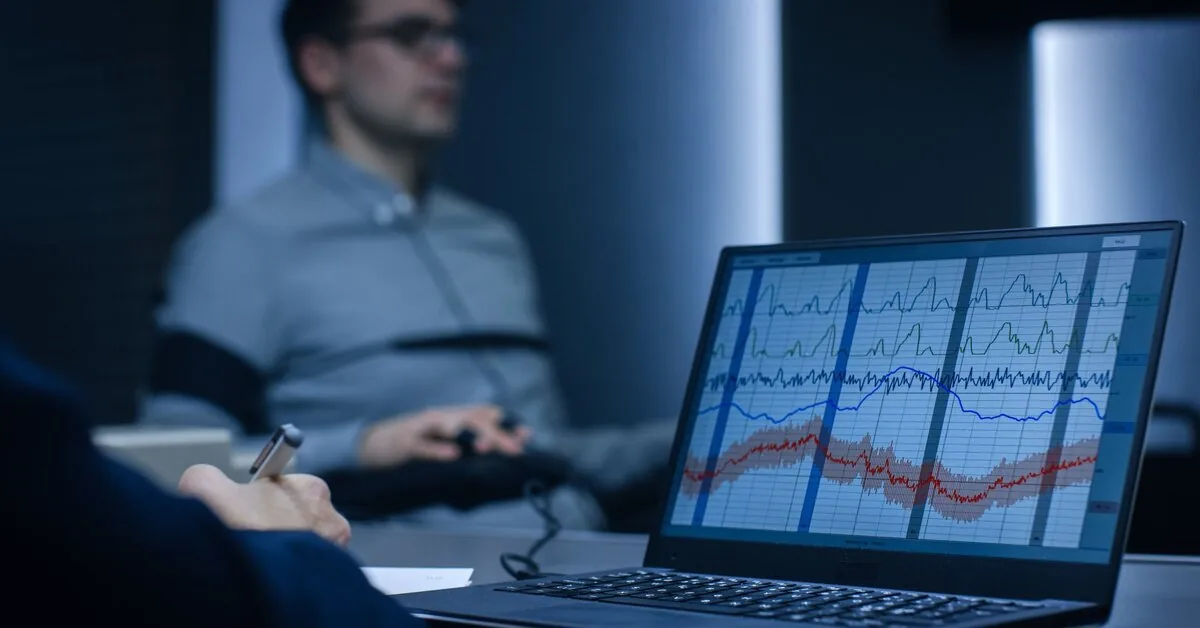
Scientists at “Vilnius Tech” tried to change this situation – they created an innovative system that transforms offices from static spaces into dynamic ecosystems that adapt to human emotions.
Read more Bloody sword attack at a Swedish school
According to Artūras Kaklauskas, a researcher at the Department of Construction Management and Real Estate at “Vilnius Tech”, professor habil. dr., the standard office environment, which is often static and tiring, ignores the individual human state and causes fatigue.

“Global studies show that when an employee works in an unsuitable office environment, their work performance decreases and affective, emotional, logical, and cognitive state indicators worsen,” says the scientist.
But what if this environment did not encourage stress, fatigue, and anxiety, but protected against it – noticed the first signals and helped to avoid it?
Raising such a question, prof. habil. dr. Artūras Kaklauskas and other “Vilnius Tech” scientists implemented a research project and created the “Affects” system (Smart, Sensory, Self-learning and Adaptive Buildings). It analyzes the employee’s emotional, affective, and physiological states in real time and adapts the work environment accordingly – from lighting, scents, air pollution (good ventilation and lower CO₂ concentration), temperature, humidity to music, films, or information presented to the employee.
“Until now, the person had to adapt to the workplace. We aim to change this logic – the workplace must adapt to the person. Only then do technologies truly serve the person, not the other way around,” the professor insists.
Employee burnout costs billions
It is still often thought that an employee’s well-being is their personal matter, but in fact, it is the opposite. Long-term stress, cognitive overload, and burnout at work reduce creativity, productivity, and work efficiency, increase the likelihood of errors, and encourage employee turnover, resulting in annual billion-dollar losses for businesses, the state, and society.
Unfortunately, most organizations notice this too late. Employee surveys, interviews, or annual well-being studies show the consequences but do not allow timely detection of the first signs. Moreover, managers often make decisions about workloads based on intuition or subjective complaints rather than objective data.
According to the scientist, this is exactly where there is room for a new generation of human-oriented smart technologies that create a completely new standard for managing the work environment.
“We do not want to state that a person has already burned out. We want to help notice the first signals of greater fatigue, anxiety, long-term stress and try to change this situation. Since adults spend a significant part of their lives in offices, the ‘Affects’ technology can act as a mass preventive measure,” says prof. habil. dr. A. Kaklauskas.
The office can become an active assistant
The most significant innovation of “Affects” is the digital twin of the employee and their work environment. This technology transforms offices from static spaces into dynamic ecosystems that adapt to human emotions: it analyzes dozens of environmental, emotional, and physiological indicators in real time and can individually adjust music, scents, lighting, images, or other elements of the work environment accordingly.
If the system notices increasing fatigue or deteriorating concentration, it can suggest a different environment to help maintain productivity. It is also important that the employee themselves decides which states they want to maintain and which environmental solutions to apply.
Read more A social worker posing as a woman stole 3 thousand euros from an apartment in Vilnius
“‘Affects’ can provide a personal, private dashboard where the employee can see their affective, emotional, physiological, logical, and cognitive resources. This can help scientifically justify the decision to say ‘no’ to additional tasks and act as an early warning system that prevents reaching critical stress and fatigue levels, so after the workday, the employee returns home with energy for personal life, not completely emotionally and physically exhausted,” lists the advantages of the technology the professor from “Vilnius Tech”.
This is also proven by research conducted by scientists involving more than a hundred people. The results showed that a personalized adaptive office environment can improve well-being, increase engagement, work performance, self-confidence, and job satisfaction.
Smart work environment – a huge competitive advantage
According to one of the project creators, “Affects” is not just a technology for employee well-being – it can also become a new, emotionally intelligent organizational management tool that provides a huge competitive advantage in the fight for the world’s best talents.
The system allows seeing summarized organizational trends – for example, increasing stress levels in a specific department or signs of long-term fatigue. This would enable timely redistribution of workloads, rescheduling tasks, creating new work groups considering employees’ emotional compatibility, making decisions about hiring additional staff or postponing deadlines.
To determine employees’ emotional compatibility, the “Affects” system and its electronic questionnaire would be used, which is useful because it allows comparing employee and “Affects” assessments and creates conditions for further system learning and improvement. Currently, the reliability of “Affects” is quite high (R2=0.88).
“Real-time measured data can clearly show the manager when employees are working at the cognitive overload limit during the examined period. This would allow company management to make decisions or take preventive measures based on reliable data, not intuition, and more accurately predict project deadlines and risks,” says prof. habil. dr. A. Kaklauskas.
However, individual employee data is not disclosed to managers – decisions are based on anonymized and summarized information, thus maintaining privacy.
“The study applied the essence of Industry 5.0 and Society 5.0 visions – mass personalization of provided services and products and human-machine synergy, combining robot precision with human creativity and critical thinking. If an employee feels controlled, such a system loses its value. Therefore, transparency, privacy, and freedom of human choice are as important to us as artificial intelligence,” emphasizes the professor.
In the future, not only companies but also work environments will compete
“Affects” stands out by combining in one system the analysis of the employee’s emotional, affective, logical, cognitive, and physiological states, smart personalization of the work environment (music, lighting colors, scents, air pollution, knowledge, films, videos, temperature, humidity), the digital twin of the employee and environment, and artificial intelligence solutions.
Scientists see broad possibilities for technology application – from offices to hospitals, rehabilitation centers, schools, universities, transport systems, or even museums. Everywhere a person spends a long time in enclosed spaces, the environment could be adapted not only for functionality but also for emotional well-being.
“In the future, not only companies but also smart work environments will compete. The winners will be those organizations that can create not only efficient but also human-understanding and adaptive workplaces. Our goal is to show that technology can contribute not only to productivity but also to better quality of life and joy,” says prof. habil. dr. A. Kaklauskas.
Read more Russia received new North Korean missiles: it became clear which regions of Ukraine are at risk