Phone and SMS scammers are constantly looking for new ways to trick people into giving away their money – they send fake messages from banks, government institutions, or couriers, urging recipients to click on links and provide personal information. Lawyer Mindaugas Urbonas, who encounters victims of such scams in his work, decided to tackle the problem with technology and created a free app called “SOS Trust SMS”.
Read more Israeli Prime Minister called the President of Turkey an anti-Semitic dictator
The idea came from the lawyer’s practice
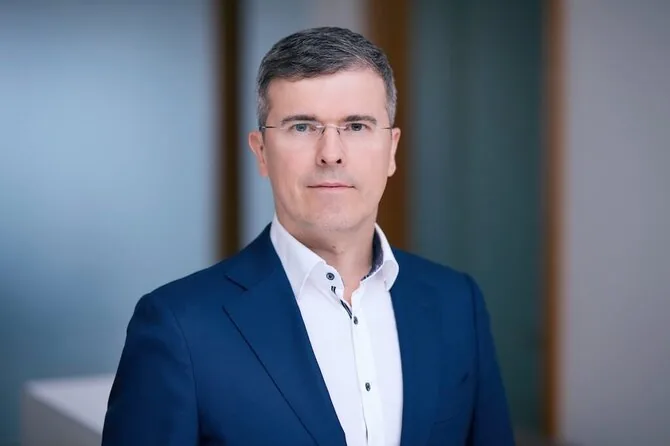
M. Urbonas explained that the idea to create such an app came directly from his professional experience. According to the lawyer, people often turn to him after losing large sums of money or even their life savings due to scammers. Although victims can be helped through legal means, the process of recovering money is often long, expensive, and emotionally difficult.
“The best help for a person is not a won case, but such protection that they never have to knock on the doors of the police or law firms,” M. Urbonas told 15min.
He was ultimately motivated to pursue the idea by a personal case. An elderly person close to the lawyer clicked on a link in a fake SMS message and entered their data. Large financial damage was avoided at that time because there were only a few hundred euros left in the account. Then, according to M. Urbonas, the idea arose to create a preventive measure that could work before a person clicks on a dangerous link.
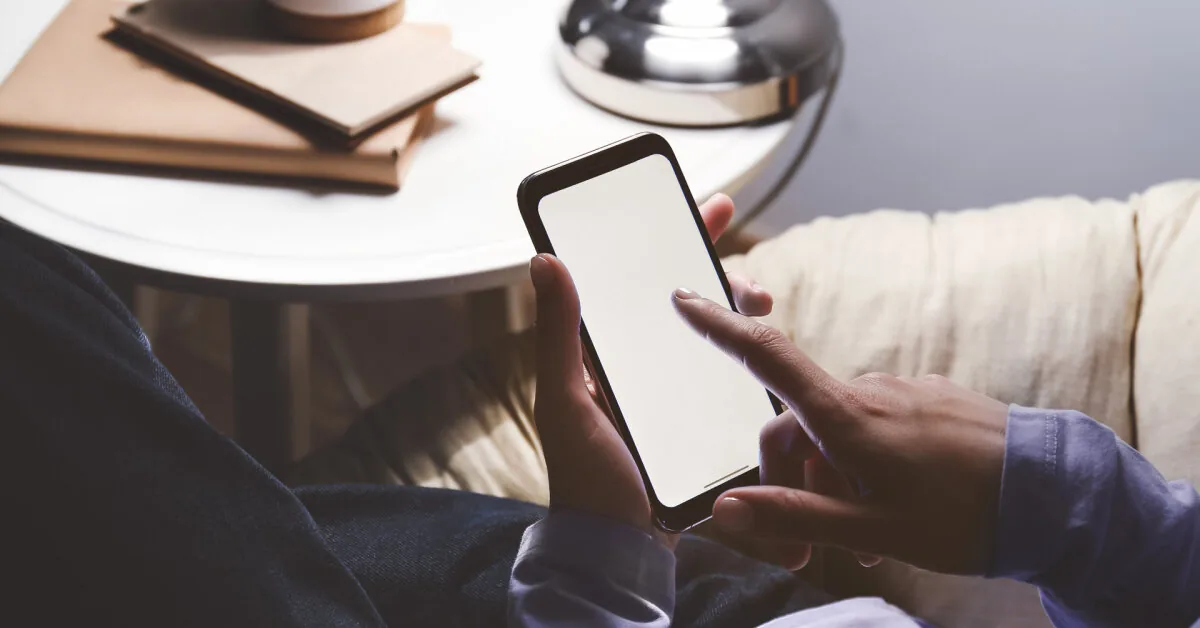
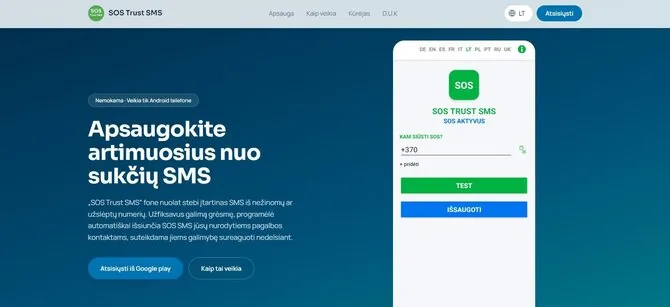
The app “SOS Trust SMS” created by M. Urbonas works on a fairly simple principle. Upon receiving an SMS, the app does not check the text but determines whether the sender is in the phone’s address book. If the message comes from an unknown number, a hidden number, or an alphanumeric sender not in contacts, the system considers it a potential threat. Then an SOS message is sent to a pre-selected close person. The recipient can contact the app user and warn them not to rush to click links or provide data.
“The child receives a signal and can call: ‘Mom, an unknown person wrote to you – don’t click anything.’ The crime is prevented before manipulation even begins,” the creator explained the principle.
M. Urbonas emphasized that privacy was one of the most important issues when creating the app. According to him, “SOS Trust SMS” does not collect or store the text of SMS messages but only checks the sender’s identifier – phone number or name. The comparison is done on the user’s phone itself, and data is not sent to external servers.
Why is the warning sent to a close person, not the user?
One of the main features of the app is that the warning about a potentially dangerous SMS is sent not to the recipient but to their chosen close person. According to M. Urbonas, this decision was made considering the psychological pressure tactics used by scammers. Scammers often try to create panic, urging immediate action, thus reducing the chance that the person will rationally assess the situation.
“If the app simply showed a red warning on a senior’s screen, there is a high chance that a stressed person would just ignore it,” said the app creator. According to him, a family member who receives the warning can assess the situation more calmly, call the relative, and stop them before they take dangerous actions.
M. Urbonas added that the app also reacts when the sender field in the SMS shows the name of an institution or company instead of a phone number, for example, “VMI”, “Sodra”, or “Police”. According to the speaker, if such a sender identifier is not in the user’s contacts, it is also considered unknown and a warning is sent to the close person. Such messages can be especially dangerous because they appear official to the user.
The app creator also claimed that his solution differs from regular spam filters. The latter often rely on lists of previously identified unreliable numbers, but scammers can change numbers or use number spoofing technologies. “SOS Trust SMS” does not evaluate the reputation of a specific number – it only matters whether the sender is in the user’s contacts.
During testing, real suspicious messages were recorded, including fake notifications about VMI overpayments and courier shipments.
Before the public launch, the app was tested for several months in a closed testing phase. According to M. Urbonas, it was used by several dozen people – his relatives and elderly clients. The creator said that during testing, real suspicious messages were recorded, including fake notifications about VMI overpayments, courier shipments, police fines, and bank links.
According to him, in some cases, seniors using the app were about to click received links, but relatives managed to intervene. However, the app itself does not determine whether a specific message is truly a scam attack – it warns about all senders not in the user’s contacts. This means that the alert can also be triggered by a completely legitimate message from a new or previously unsaved number.
Read more The schedule for «Lietkabelis» control matches has been revealed
He took on the programming himself
Although M. Urbonas is a lawyer, he wrote the app code himself without hiring programmers. The creator said he discussed technical solutions with several cybersecurity specialists in his professional network, but the main app operation strategy was based on his experience working with fraud and cybercrime cases.
“I simply turned my many years of legal and criminological experience into working code,” shared M. Urbonas.
The creator decided to distribute this app for free. According to the lawyer, a paid product might not reach the people who need such protection the most.
“I am convinced that security should not be a luxury – especially when we talk about the most vulnerable members of society,” he said.
The creator said he is currently looking for partners among banks, telecommunications, and other companies, but not for funding, rather for help spreading information about the app.
Currently, “SOS Trust SMS” is intended for phones using the Android operating system.
M. Urbonas explained that even when creating the Android version, he had to adapt to system modifications used by different phone manufacturers. For example, apps running in the background on Samsung, Xiaomi, or Google phones can be managed differently.
An iPhone version is not planned in the near future. According to the creator, this is due to iOS operating system restrictions that do not allow third-party apps to monitor incoming message senders in the background and automatically perform necessary actions in the same way.
The biggest mistake is rushing
According to M. Urbonas, technological tools can complement public education about scams. Informational campaigns alone, he said, are not always enough because scammers deliberately try to cause stress and force people to act thoughtlessly. The lawyer identified rushing as one of the most common and costly mistakes.
Scam messages often say that the account will soon be blocked, urgent payment for a shipment is required, or data must be provided immediately. Such wording forces a person to make a decision as quickly as possible.
Another mistake, according to M. Urbonas, is trusting too much the sender’s name displayed on the phone screen.
Therefore, when receiving a worrying or urgent message, the lawyer advises not to take any action immediately. First, one should contact a close person or the institution on whose behalf the message is sent, but find their contacts independently, not using phone numbers or links provided in the SMS itself.
“When you receive any frightening message, put the phone on the table and do nothing for at least five minutes,” advised M. Urbonas.