AI: helper or another source of noise?
The conference topic was chosen intentionally. Artificial intelligence is becoming an increasingly significant part of everyday life – it helps to search for information on various issues – from health to psychology, relationships, lifestyle, analyzes data, provides personalized recommendations, and more and more people turn to chatbots for emotional support as well.
“We have never had such quick access to information about health, self-observation tools, personalized recommendations, or technologies capable of examining health status,” notes the conference organizer, neuroeducator and Gestalt psychotherapist Rasa Kašėtė.

However, in her opinion, a new risk arises – a person may begin to trust their own wisdom and decisions less and less.
“Having the opportunity to get answers with just one button press, there is a danger of losing the ability to listen to one’s inner wisdom, emotions. In other words, the question arises whether the use of artificial intelligence increases our awareness or, on the contrary, decreases it?” asks the conference organizer.
An even more complex question arises in the field of emotional health. AI can be accessed at any time of day, listen and not judge. But can an algorithm replace a live human connection? Or does AI, being so convenient, indirectly lead to withdrawal from personal communication with people and the challenges it brings?
This is exactly what two psychiatrists and psychotherapists will discuss at the conference – Olegas Lapinas, whose presentation title sounds provocative: “What AI already does better than your psychotherapist and where is its limit?”, and Mindaugas Jasulaitis, who will examine AI as a new form of conversation, advice, and emotional support.
“What happens when an algorithm starts to seem more patient, attentive, or understanding than another person? How does this change our understanding of communication, closeness, and help?” asks M. Jasulaitis.

What technology will not do instead of a human?
The conference will also discuss those human qualities whose importance only grows in the age of technology.
Professor Eugenijus Laurinaitis will talk about the meaning of life and what technology will not do instead of a human, Dr. Julius Neverauskas will examine the development of awareness and wisdom, and actress and psychologist Beata Tiškevič will speak about creativity in a world where AI can offer hundreds of creative solutions in seconds.
According to R. Kašėtė, creativity, live relationships, and the ability to experience are the areas where a person is not replaced by mere technological efficiency.
“It is important not to lose what makes us human – the ability to create connection, feel, be aware, care for ourselves and others,” she says.
Read more 3 plum pruning rules: do this now, and the plums will be sweet and juicy
The faster the world changes, the more important it is to maintain connection with oneself
The conference organizer emphasizes that “NeuroRestartas” is not an invitation to fear technology. On the contrary – the aim is to understand how to use the opportunities they provide without losing what is most important to a person.
Several conference speakers will also share about innovation opportunities in the health field: geneticist Prof. Dr. Danielius Serapinas will present the principles of personalized medicine and treatment considering individual genetics, neurosurgeon Dr. Andrius Radžiūnas will talk about the latest technologies in treating nervous system diseases, and doctor and endobiogenics specialist Evelina Nevardauskaitė-Rudzikienė will examine the challenges of modern women’s health.

“Technology can help live healthier, more efficiently, and more comfortably. But I strongly believe it is important not to lose what makes us human,” says R. Kašėtė.
According to her, the main message of this year’s conference can be summed up in one sentence – the faster the world changes, the more important it is to maintain connection with oneself.
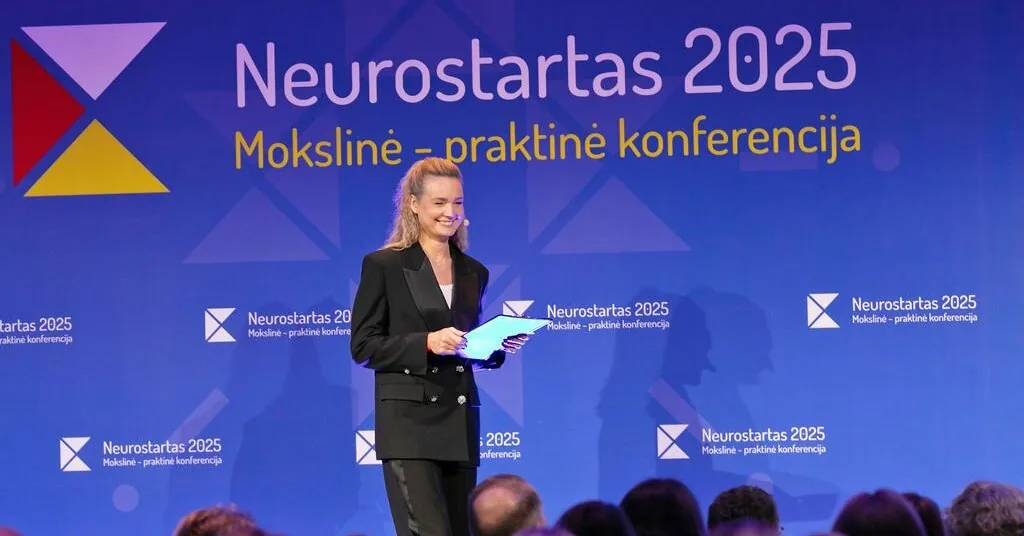
“NeuroRestartas” is an annual scientific-practical conference dedicated to scientifically based methods of strengthening physical, psycho-emotional, and spiritual health. The conference is intended for both specialists and everyone interested in health, self-knowledge, and personal well-being.
After seven years of existence, the “Neurostartas” conference is renewed this year and becomes “NeuroRestartas.” According to the conference organizer R. Kašėtė, the new name reflects the needs of the times.
“Living in the modern world, it is no longer enough just to start effectively; the most important skill becomes the ability to restart or constantly return to harmony in a constantly changing world,” says R. Kašėtė.
The idea of the “Neurostartas” conference was initiated in 2018 by the pioneer of neuroeducation in Lithuania, author of neuroeducational methods Marija Mendelė-Leliugienė. In 2026, the conference is renewed and held for the first time under the name “NeuroRestartas.”
Over the years, the conference has grown from a small event to a meeting gathering more than 500 participants. The event is traditionally moderated by actress, TV show host, body psychotherapy practitioner, and neuroeducator Jurgita Jurkutė-Širvaitė.
“NeuroRestartas” will take place on October 10 at the “Radisson Blu Hotel Lietuva” in Vilnius, detailed conference program and tickets can be found on the website www.neurorestartas.lt.
Read more After the storm over work at Raudondvaris Manor, the Prime Minister’s wife broke the silence