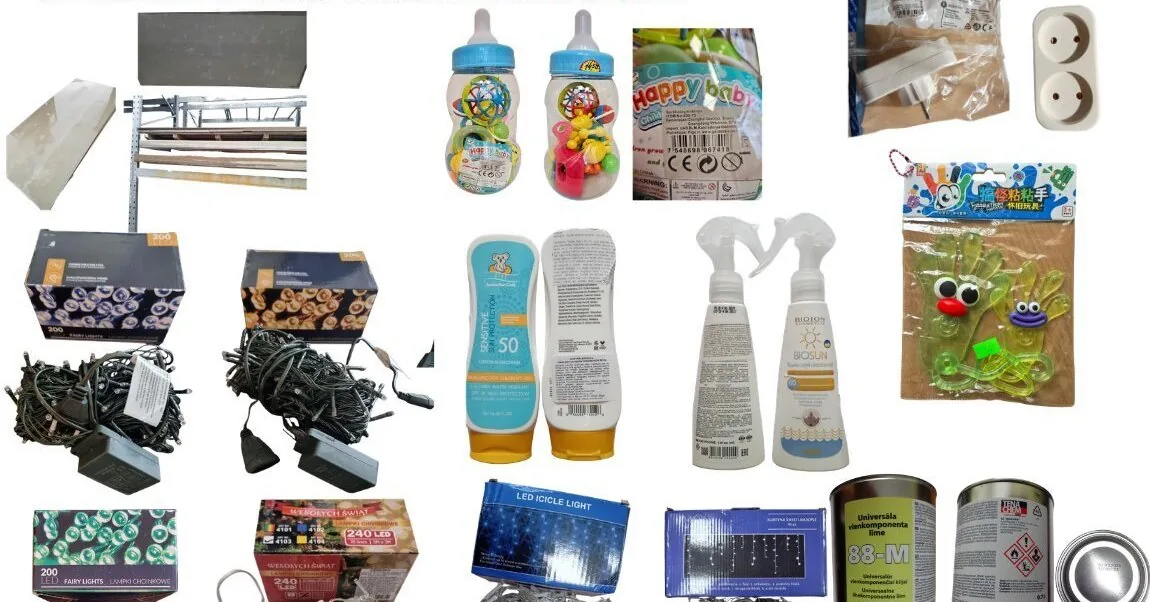
Thousands of euros in fines were imposed on 10 companies, and one received a warning for supplying dangerous products to the Lithuanian market, as decided by VVTAT after examining cases of violations of the Republic of Lithuania’s Product Safety Law.
Read more Firefighters who helped extinguish forest fires in Southern France welcomed in Vilnius
The largest fine – 5 thousand euros
The largest fine was given to the company “Specializuota komplektavimo valdyba,” which imported cement chipboards “AMROC” recognized as dangerous into Lithuania. Considering the risk, a serious fire hazard was identified – in case of fire, the product may ignite faster than expected and may contribute to the spread of fire, posing a danger to consumers’ health and life.
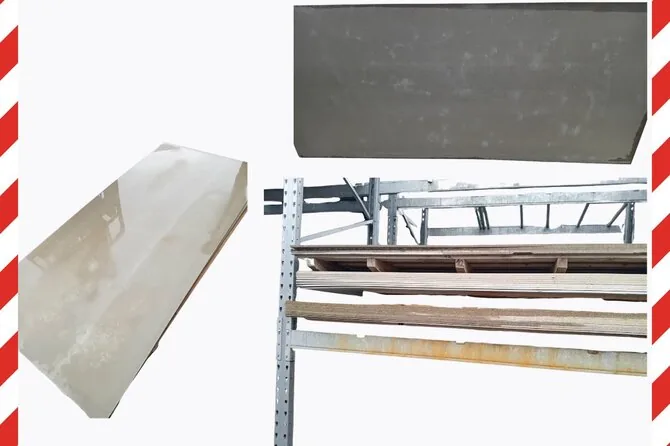
The company was fined 5,000 Eur and ordered to pay 2,071.33 Eur for expert examination costs.
Among the fined – a well-known retailer
The second largest fine – 4,800 Eur and an order to pay 143.35 Eur for expert examination costs – was imposed on the well-known retail chain “Kesko Senukai Lithuania,” which imported universal contact adhesives “88-M TENACHEM” recognized as dangerous.
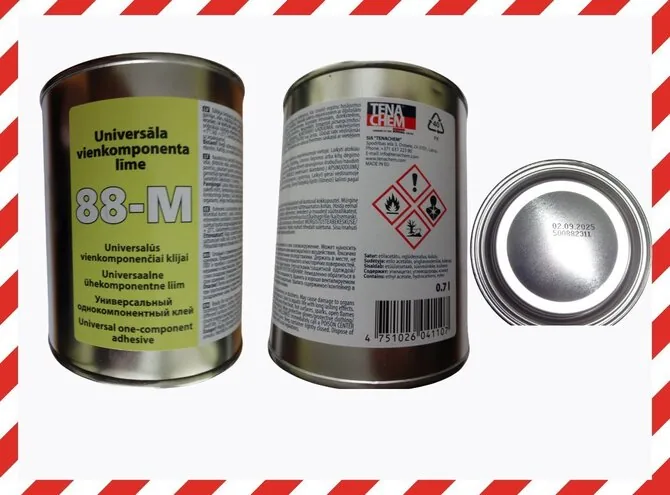
Tests revealed that the toluene concentration in the adhesive was 0.12% by mass, exceeding the allowable limit of 0.1% by mass in adhesives intended for the public. Labeling deficiencies were also found – the package did not indicate the unique mixture identifier (UFI code), the name of the hazardous chemical, precautionary phrases, and tactile hazard markings were missing.
A serious chemical risk was identified – toluene has toxic effects on reproduction and specific toxicity to certain organs.
Dangerous toys
Fines of 3,300 Eur were imposed on companies that imported dangerous toys.
The company “Markadas” was fined for importing the plastic toy “Stretchy Hands.” Tests showed that the additional plastic film in the packaging was thinner than safety requirements, posing a risk that a child could cover their mouth and/or nose or respiratory tract.
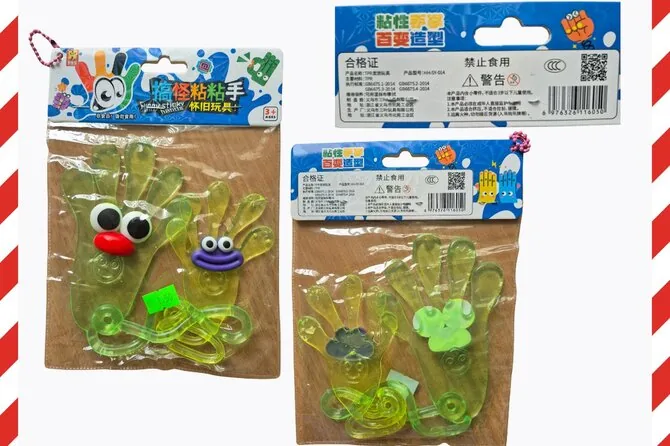
Labeling deficiencies were also found – warnings and other instructions were provided only in Chinese, and the symbol warning that the toy is not suitable for children under 36 months did not meet established requirements.
A fine of 3,300 Eur and an order to pay 333.96 Eur for expert examination costs were imposed on the company and “BLM” for supplying a rattle set in a bottle. Tests showed that after impact, one rattle’s body cracked, small parts detached, and small balls spilled out. The risk assessment indicated a choking hazard for children playing with it. Also, not all relevant information on the product label was provided in Lithuanian.
Four electric garlands posed a danger
Electric garlands “SPRINGOS” CL0204, CL0207, and CL0209 supplied by a company operating under the well-known retailer “Varle” franchise in Vilkaviškis were recognized as dangerous.
Tests showed that the garland wires were not properly protected against tension and twisting; they broke during tensile tests, and the cross-sectional area of the LED power wires was much smaller than required. The control device cover of model CL0204 could also be easily removed, exposing live parts. A serious risk was identified – touching the high-voltage parts of the product poses a risk of electric shock and death.
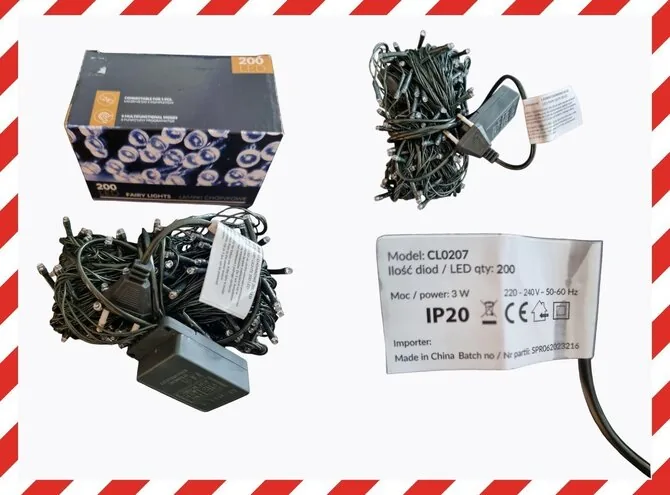
The company was fined 3,100 Eur and ordered to pay 3,195.61 Eur for expert examination costs.
The electric garland supplied by UAB “Lizėja” was also recognized as dangerous. Tests showed that the product did not meet electrical safety requirements – not all necessary markings and warnings were provided, wires were not properly protected against tension and twisting, and the cross-sectional area of the LED power wire was much smaller than required. A serious risk was identified – touching the high-voltage parts of the product poses a risk of electric shock and death.
Read more Donald Tusk: Poland will soon have the largest army in Europe
The company was fined 3,100 Eur and ordered to pay 2,188.89 Eur for expert examination costs.
Another dangerous garland was imported by Aleksandr Dagil, who operates as a sole proprietor. His supplied electric icicle garland “MON ML42” was recognized as dangerous because tests showed the product did not meet electrical safety requirements – no user manual in Lithuanian, missing mandatory markings and warnings, the control device cover could be easily removed exposing live parts, wires were not properly protected against tension and twisting, and they broke during tensile tests. Also, the cross-sectional area of the LED power wire was much smaller than required.
“A serious risk of electric shock was identified – touching the high-voltage parts of the product poses a risk of electric shock and death,” the service’s conclusion states.
The operator was fined 1,000 Eur and ordered to pay 2,188.89 Eur for expert examination costs.
The electric garland supplied by UAB “Katarata,” barcode 5905326218144, was also recognized as dangerous. Tests showed the product did not meet electrical safety requirements – no user manual in Lithuanian, missing mandatory markings and warnings, and the control device cover could be easily removed, allowing contact with live parts. Wires were not properly protected against tension and twisting, and their cross-sectional area was much smaller than required. During tensile tests, the power wire broke after two pulls, and the wire leading to the LED bulbs broke immediately. A serious risk of electric shock was identified – the garland may pose a danger to people’s health and life.
No fine was imposed on this company – only a warning was issued, and they were ordered to pay 2,188.89 Eur for expert examination costs.
From SPF creams to electric power strips
VVTAT also inspected sunscreens. The protective cream for children “Australian Gold SPF 50” supplied by UAB “Lenova” was recognized as dangerous because laboratory tests showed the actual SPF of the cream was 16.1 (in vitro) and 15.7 (in vivo), not matching the declared SPF 50 on the packaging. The actual SPF is three times lower than declared. Considering the risk, it was determined that the cream does not provide the declared protection against UVA and UVB rays, increasing the risk of skin redness, various degrees of burns, allergies, premature skin aging, and skin cancer. It is especially important as the product is intended for children. The company was fined 3,000 Eur.
The same fine was imposed on E. Valiukas’s sole proprietorship, whose supplied spray lotion “BIOSUN SPF 60 UVA+UVB Maximum Protection” also did not meet its description. Laboratory tests showed the actual SPF of the lotion was 7.0 (in vitro) and 7.4 (in vivo), not matching the declared SPF 60 on the packaging. The actual SPF is eight times lower than declared. A serious risk was identified – users may be insufficiently protected from ultraviolet rays, increasing the risk of sunburn, allergies, premature skin aging, and skin cancer.
Another dangerous product was the electric power strip “PLASTROL” supplied by the company “Flamanda.” Tests showed the product did not meet electrical safety requirements – missing mandatory markings and warnings, the power strip could be opened with a simple screwdriver, and its pins were not mechanically strong enough and could unscrew without disassembling the casing. Using the product poses a risk of electric shock and burns.
The company was fined 1,500 Eur and ordered to pay 2,739.44 Eur for expert examination costs.
Consumers urged to return these products
Having identified the danger these products pose to consumer health and safety, VVTAT banned their supply to the Lithuanian market and obliged economic operators to remove the products from the market, recall them from consumers, destroy them, and warn consumers about the possible risk. Consumers who have purchased these dangerous products are urged not to use them, to contact sellers, and to get a refund.
The service’s decisions can be appealed to the administrative court within one month from the day the decision is delivered to the economic operator, according to the procedure established by the Law on Administrative Proceedings.
Read more French hairdressers’ rule: a 3-step test will show if bangs suit you