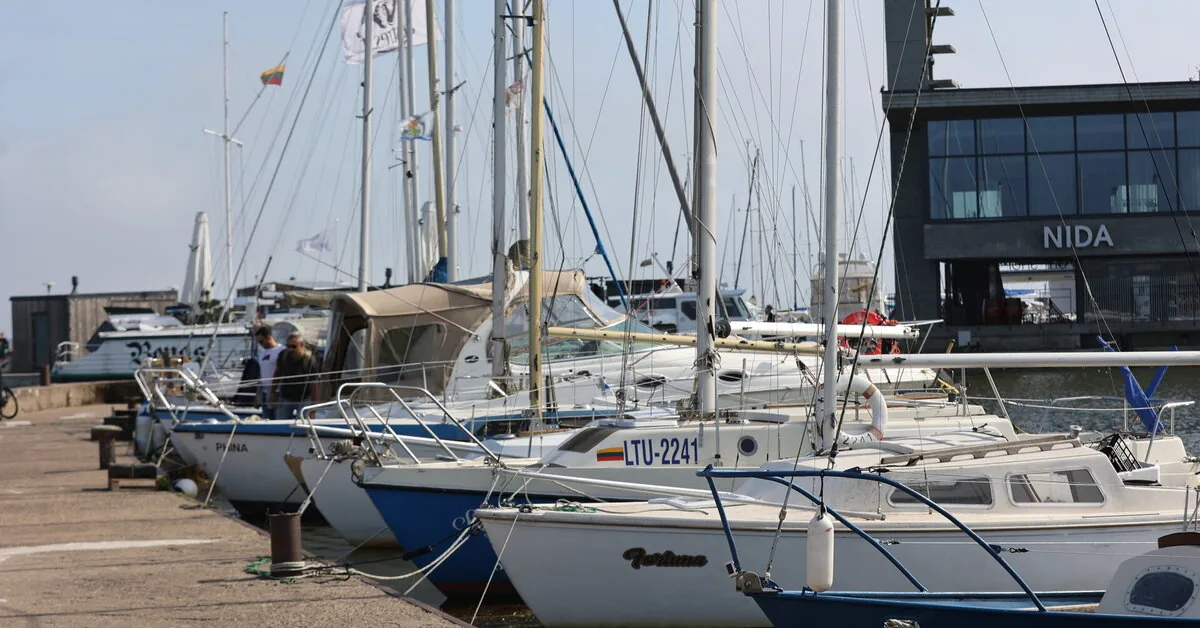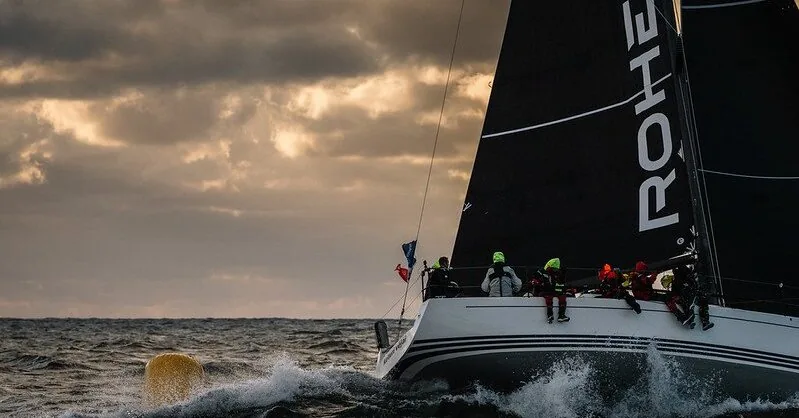
Already 50 nautical miles from the shore, the sailing ship crew had to set up a turning mark at a precisely determined location and keep watch until all the sports yachts had passed it. “You can’t measure the waves with a roulette, but the wind reached up to 15 meters per second. The conditions were maritime, definitely not a beach,” laughed the captain of “Brabander,” Ričardas Ramanauskas.
Read more Sensational news about the divorce – Džilda and Orestas Vaigauskai themselves spoke out
The first scoring stage of the championship on August 10 was a serious test for both the sailors and the race organizers. Yachts of classes A and B covered a 240 nautical mile course, class C – 195 nautical miles. For most of the race, the wind blew at 10–15 m/s.
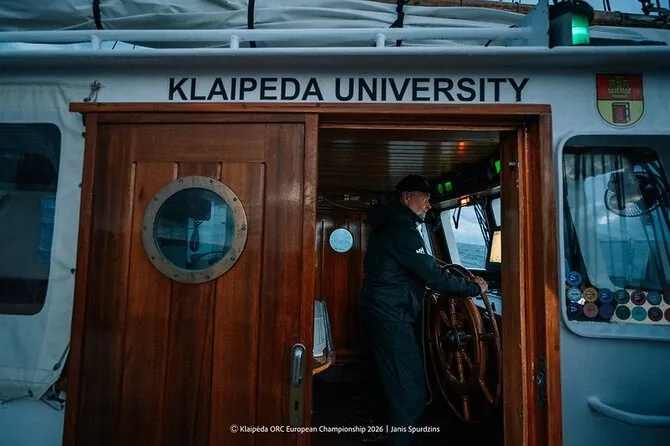
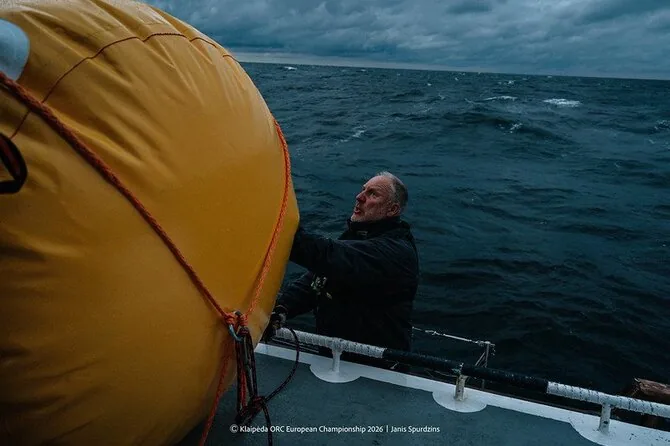
One of the course points was an inflatable turning mark, called a buoy, set far from the shore in the Baltic Sea. It was delivered to the predetermined location by the KU sailing ship “Brabander,” which served as the judges’ boat.
“We had to hit the exact coordinates of the mark so that the yachts could find it in the dark. We sailed back and forth all night, watching how other boats ‘took’ the mark,” the captain recounted.
Due to the great depth and difficult weather conditions, “Brabander” could not drop anchor, so the crew had to drift and maneuver back and forth all night, watching the mark and the yachts approaching it.
The “Brabander” team worked in shifts. It was necessary not only to reach the specified location and wait there for all the race participants but also to safely return to shore after the night watch through the stormy sea.
“We worked in turns, sleeping for a couple of hours. Although the sleep was not great – you roll back and forth on the deck,” R. Ramanauskas recalled the night at sea.
Read more Romania stops the operation of its nuclear power plant
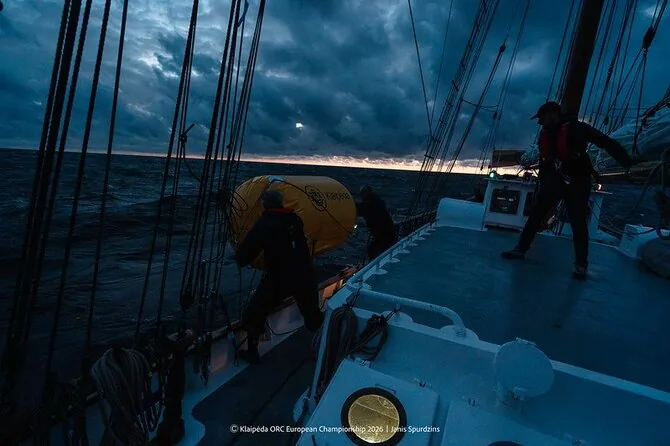
Considerable precision and physical effort were required not only to set up the mark but also to retrieve it after the race stage ended.
“It was not easy to set the mark, even harder to pull it out. We had to approach it through the waves. There was work to do,” the captain said.
The entire “Brabander” journey to the task location, the night watch, and the return took about one and a half days. Despite the difficult conditions, the role of the judges’ boat gave the crew the opportunity to closely observe the championship.
“I feel like a spectator sitting in the front row,” smiled R. Ramanauskas.
The KU marine yacht “Odyssey” also participates in the championship as a judges’ boat. As a race participant representing the university community, “Brabander” crew member, chief captain’s assistant Antanas Gerasimavičius, sails the yacht “Tojana.” You can follow how he and other race participants are doing here.
Read more Ukraine and Russia exchanged the remains of fallen soldiers