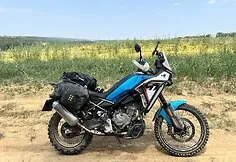
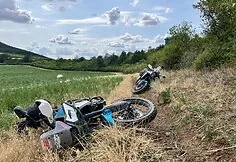
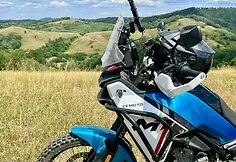
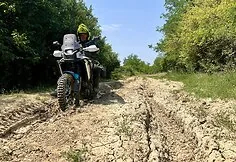
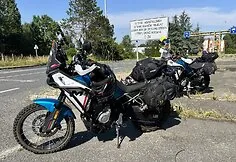
“When traveling with two motorcycles, you can only ride parallel to each other, because as soon as you pass, an opaque wall of dust rises, which lingers in the air for a long time,” recalls the traveler. However, this did not prevent enjoying the largest lake in Hungary and the landscapes along the way.
Read more Rotterdam man arrested after knife attacks
Hungary – great for beginners
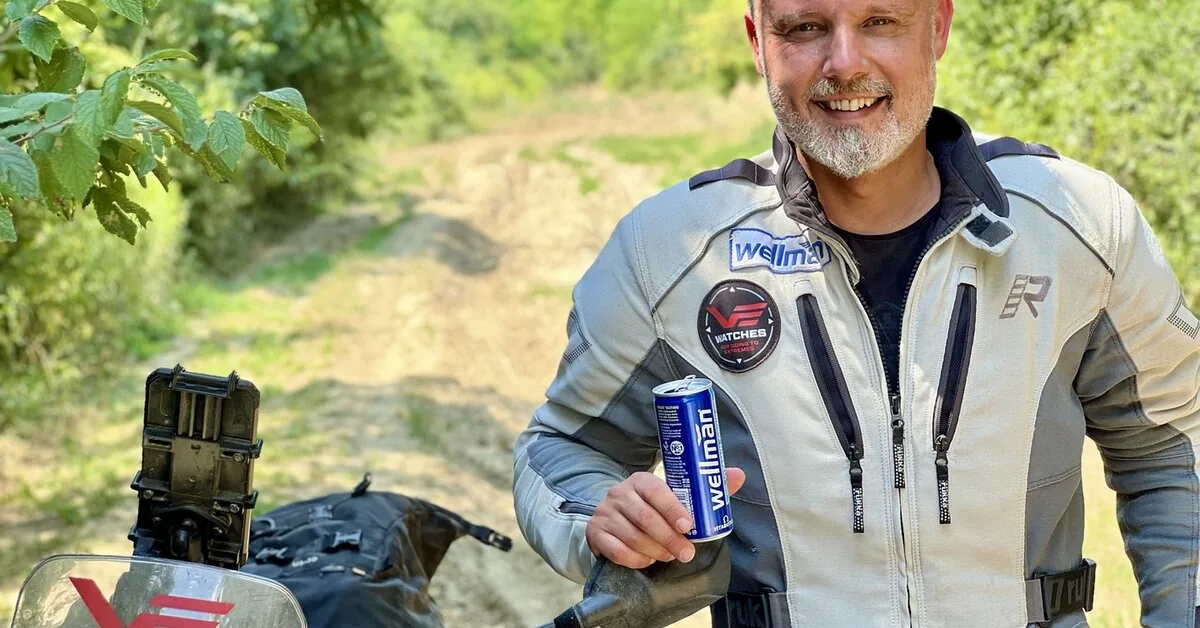
K. Mieliauskas reminds that “Europe Vertical: Off-road” is an expedition through 13 countries from Athens to the northernmost point of Europe, Nordkapp in Norway, on unpaved roads and off-road. This project differs from other well-known traveler projects in that at each stage, another motorcycle enthusiast rides along with him, someone who wants to try off-road riding and already rides it but wants to gain more experience and embark on an adventure. In total, about 7,000 kilometers were planned to be covered off-road, but upon reaching the finish of the fourth stage in the Croatian capital Zagreb, the odometer already showed nearly 4,000 kilometers.
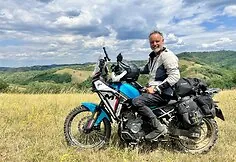
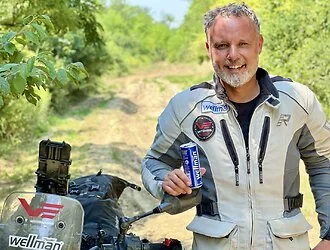
“The fifth stage started in Zagreb, and the route led through Hungary and Slovakia to Krakow. This time, my riding partner was Alenas, the head of the accommodation facility. In his youth, like many, he rode a motorcycle but later forgot this hobby. After almost 30 years, he wants to return to motorcycling,” says K. Mieliauskas.
He says that Alenas’s choice to travel with an experienced motorcyclist was a good decision: “I call this format ‘ride&train,’ meaning to ride and learn in real situations with help, because that’s how skills develop, and it happens very quickly.” According to the motorcyclist, Hungary is especially suitable for beginners or those returning to motorcycles – there are hills, forests, sand, and approaching Slovakia you can find higher mountains, so you can try a full range of surfaces, but there are no extreme sections like in Bosnia.
Challenge with clay and dust
Hungary is known for its clay off-road sections, especially in forests and gravel roads. The motorcyclists encountered them already on the first days of the trip. “Hungary greeted us with 38 degrees Celsius heat in the shade, so the roads were like cement-dried clay. Theoretically, this is a fairly hard surface for riding, but in reality, there were deep frozen tractor or SUV ruts left after rain. This means the ride becomes technical because you have to watch all day not to fall into a rut,” recalls K. Mieliauskas.
However, the cement-hard ruts were only part of the difficulty. The motorcyclist explains that the surface of drying clay turns into dust, so when approaching such a section, it seems like you will be riding on a layer of sand an inch thick:
“But this is a deceptive impression because it’s not sand but very light clay dust, resembling feš-feš – a very fine soil found in deserts, which has a powder-like consistency. As soon as touched, feš-feš rises into the air and creates a thick, long-lasting dust cloud that completely obscures visibility.
This causes two challenges – since this dust cannot support any weight, riding through it is sticky. Also, when traveling with two motorcycles, you can only ride parallel to each other because as soon as you pass, an opaque wall of dust rises, which lingers in the air for a long time. Riding one behind the other requires maintaining at least half a kilometer distance. I recommend watching the travel video story – the visuals are impressive.”
Read more Ukraine: Russia ordered its soldiers to start a «hunt»
The combination of heat and dust forced travelers to drink even 6–7 liters of water per day and not forget supplements that helped restore lost minerals and electrolytes. K. Mieliauskas recalls that he last drank such amounts of water several years ago while riding through Iraq.
Balaton and other curiosities
Despite the clay, dust, and heat, both motorcyclists enjoyed Hungary’s nature. Part of the route ran along the southern shore of Lake Balaton. Lake Balaton, often called the “Hungarian Sea,” is the largest freshwater body in Central Europe, with an area of nearly 600 sq. km. Vineyards surround the lake, and there is well-developed infrastructure for sailing and swimming, making it the country’s most popular holiday destination for many decades. Moreover, the lake is shallow and warm – something the motorcyclists confirmed by stopping for a swim.
“Our route crossed Hungary from southwest to northeast, so we mostly rode through cultivated fields growing sunflowers and corn. We also passed through the Zala and Balaton wine regions, as well as the Etyek-Buda region, known as Hungary’s Champagne, which stretches over picturesque, sunlit volcanic hills.”
K. Mieliauskas says that now is definitely the most beautiful time to travel in Hungary – lots of greenery, colors, and wonderful sunsets. Constant companions on the road were hares, foxes, wild boars, and various birds. “It may sound strange, but riding through Hungary gave me a feeling of home, even though in terms of kilometers it’s still far from Lithuania. It’s hard to describe, but everyone who has traveled knows it. I really like coniferous forests, so when entering a pine forest in Hungary, it seemed very similar to Lithuanian ones and gave a good feeling,” recalls the motorcyclist.
Injuries avoided, falls not
The last one and a half days of the route ran through the mountains of Northern Hungary, and the climate changed drastically – the scorching heat was replaced by rain. “On one hand, it was pleasant; on the other, the rain wet the clay, making the ascents and descents very slippery and resembling ice rinks. Also, you never know what you will find when descending, maybe you’ll have to turn back, which would be a very unpleasant task. I really can’t imagine how to climb such a slippery ascent. Luckily, we didn’t have to try,” says K. Mieliauskas.
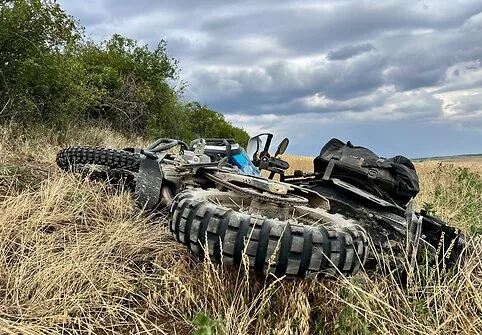
However, falls could not be avoided during the Hungary stage, but the motorcyclist says this is a natural learning process: “When learning to ride off-road or returning to such riding after many years, falls are natural and inevitable. Alenas did very well; the skills acquired in youth did not disappear, he refreshed his abilities and was well prepared to return to motorcycling. It’s good that there were no injuries, and the CFMOTO 450MT held up very well.”
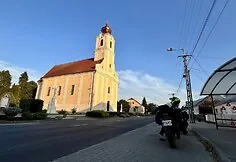
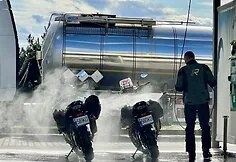
Upon entering Slovakia, the off-road ended – this country is unique in that all motor vehicles are prohibited or very restricted from riding on unpaved roads. The stage ended in the Polish city of Krakow, where the motorcycles, having covered 1000 km in 6 days, were taken to the CFMOTO dealership for routine inspection and preparation for the sixth project stage through Poland. K. Mieliauskas says the upcoming stage will be special because it will end in Lithuania: “This will be another achievement for me – I will have ridden from Athens to Lithuania. Therefore, I invite you to continue following the project – reading, watching videos and photos, and drawing inspiration.”