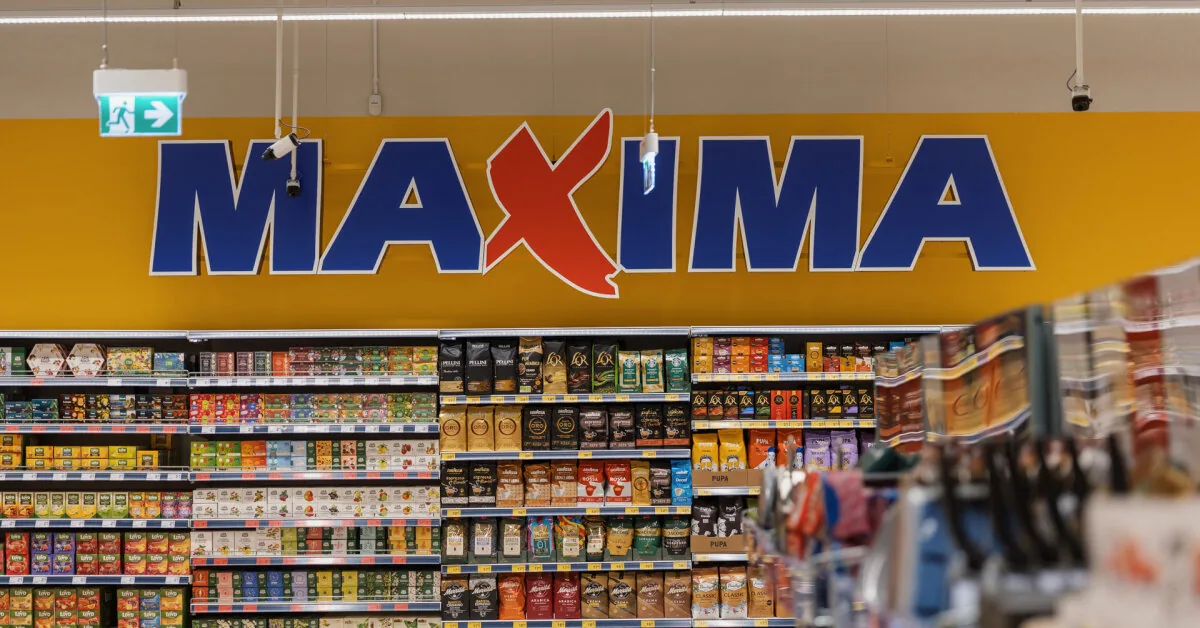
This tactic was chosen based on customer preferences
A new campaign “Cheaper, therefore tastier” appeared in the “Maxima” retail chain from June 9, with labels presenting price comparisons with other retail chains.
Read more New temperature records in Austria and Slovakia
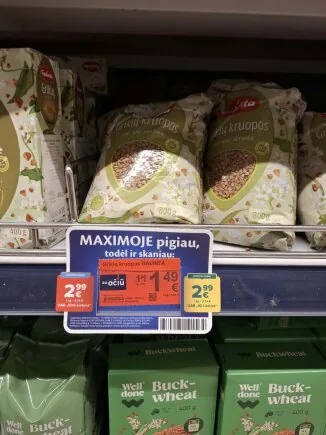
For example, it is announced that “GALINTA” buckwheat groats cost 1.49 Eur with the “Ačiū” card at “Maxima”, while at “Rimi” and IKI they cost 2.99 Eur.
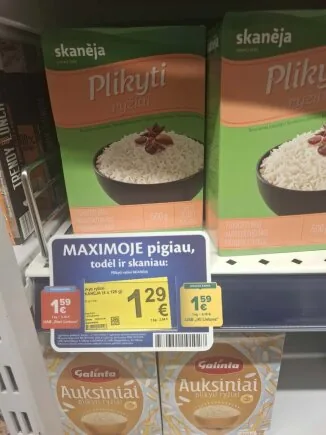
Or instant rice “SKANĖJA” costs 1.29 Eur in the “Maxima” retail chain, while at IKI and “Rimi” it costs 1.59 Eur.
Viktorija Korkozienė, Director of the Marketing Department at “Maxima”, mentioned that this tactic was chosen based on customer preferences.
“After significantly reducing regular food prices for the first time in March, we received customer suggestions to more clearly show how much our prices have decreased and how they differ from other retail chains’ prices. Therefore, we started a campaign aimed at showing customers with specific examples the usual price differences of everyday goods and that these products can be purchased at lower regular prices in “Maxima” stores,” she told 15min.
According to her, prices are compared across different food product categories that make up an important part of the daily shopping basket. During the campaign, prices are compared with other major national retail chains – “Rimi”, “Iki”, “Lidl”, and “Norfa”.
“To ensure price comparisons are accurate, clear, and objective, we compare only identical products – the same brand, the same quantity or weight. We continuously monitor the prices of compared products, and upon noticing changes in other retail chains, we promptly update the information in promotional materials,” emphasized the Marketing Department Director of “Maxima”.
She also stated that this campaign has achieved its goal:
“We receive not only positive feedback from “Maxima” customers but also their surprise that the regular prices of identical products can differ so significantly across retail chains. Customers appreciate the opportunity to clearly see these differences and more easily assess where a specific product can be purchased cheaper.
If other retail chains started applying similar comparisons, we would consider it a normal part of competition. The most important thing is that identical products are compared, relevant prices are used, and comparison conditions are clearly presented to customers,” emphasized V. Korkozienė.