Apartment buildings, winter, and distances shape a different calculation
The situation of buyers in the Baltic countries is specific. Many families live in apartment buildings where a personal charging spot is more of an exception than a rule, and public stations require planning: you need to find a free spot, wait, and pay more for convenience than charging at home.
Read more Analysts revealed what has recently driven inflation
Climate and geography also contribute. In the cold season, the distance traveled on electricity noticeably shortens, and trips between major regional cities cover hundreds of kilometers, so battery capacity becomes not a theoretical but a very practical issue.

Between a pure electric car and a conventional gasoline car, there is an intermediate path – a self-charging or full hybrid (HEV). Its battery is charged not from the electric grid but while driving, so the only infrastructure this car needs is a gas station. The latest example of such a solution in Lithuania is the “Chery Tiggo 7 HEV,” which appeared this summer, whose official data allow calculating the technology’s benefit in precise monetary terms.

The car itself generates energy
The basis of such hybrid power systems is a small battery (in the discussed example – 1.8 kWh capacity) and an electric motor working together with a gasoline engine. Energy to charge the battery is produced in two ways: part is generated by the gasoline engine itself, and part is recovered during braking when the electric motor turns into a generator and converts kinetic energy into electricity.
The system logic is simple: the gasoline engine tries to operate only in its most economical mode, and all other situations are covered by the electric drive part. In the city, where speeds are low and braking is frequent, a significant part of the journey is done solely by the electric motor, and the driver does not need to select any modes.
This solution differs from the plug-in hybrid (PHEV) by battery size and philosophy: the plug-in has a larger battery charged from the grid and allows driving tens of kilometers on electricity alone, but its full benefit is revealed only when regularly charged. The full hybrid operates without any cables – and precisely because of this, its history in the automotive industry has developed uniquely.
Technology developed by the Japanese ceased to be their exclusivity
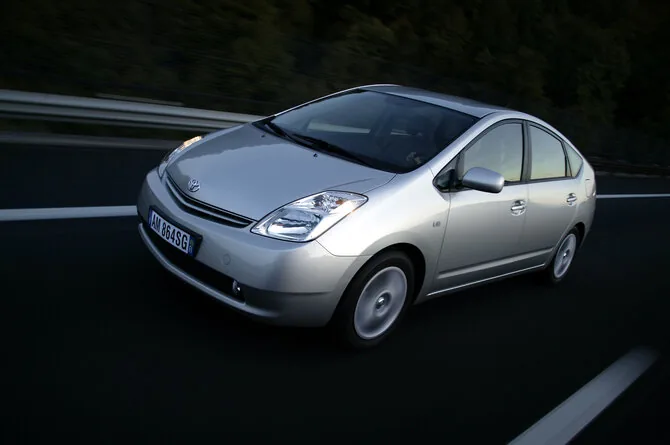
The history of the full hybrid began in 1997 when Toyota introduced the Prius – the first mass-produced hybrid car. Initially met with skepticism, it gradually became a benchmark for fuel efficiency, and the technology itself became the Japanese manufacturer’s calling card: a drivetrain combining an internal combustion engine and an electric motor had no equal competitors for many years.
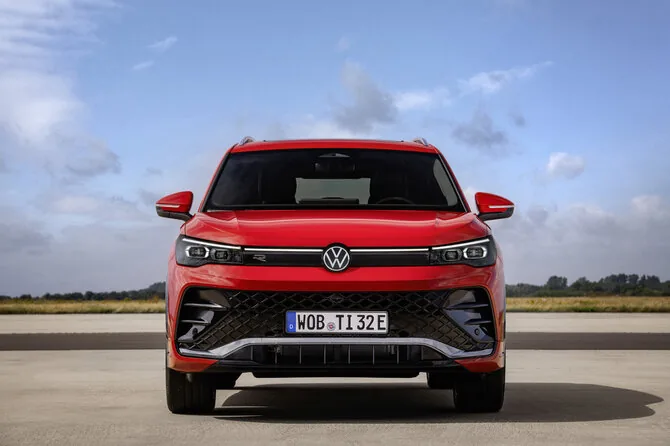
European manufacturers at that time chose a different direction. Volkswagen and Audi today offer mild 48-volt hybrids, which cannot drive on electricity alone and, according to the manufacturers’ data, reduce fuel consumption by only 5–10%, and plug-in hybrids that need to be charged from an external energy source – a station or a socket. There are essentially no self-charging hybrids in the German lineups, so in the segment that seems most logical under Baltic conditions, they currently have no direct answer.
Meanwhile, Chinese manufacturers have mastered the Japanese technology. According to the manufacturer, Chery’s fifth-generation hybrid engines have a thermal efficiency – the proportion of fuel energy usefully utilized – of up to 44.5%, which reviewers consider one of the highest figures among serial hybrid engines worldwide.
Read more Media: Iranian Revolutionary Guard stops 3 oil tankers in the Strait of Hormuz
What was Toyota’s exclusivity for almost three decades is now available in the assortment of new market players. The only difference is warranties: the Chinese manufacturer offers a 7-year or 150,000 km warranty in Lithuania, while, for example, Volkswagen typically provides a 3–5 year or 100,000 km warranty for new cars.
Arithmetic for a family driving 20,000 kilometers per year
Calculating the hybrid’s benefit is simple. Driving 20,000 km per year, the declared fuel consumption of the Chery Tiggo 7 HEV at 5.7 l/100 km equals 1,140 liters of gasoline. According to the Lithuanian Energy Agency, the average price of 95-octane gasoline at the beginning of July 2026 was about 1.7 euros per liter, so the annual fuel bill would be about 1,930 euros.
The gasoline version of the same model, consuming 7 l/100 km, would use 1,400 liters per year, costing about 2,370 euros. The difference is about 260 liters and around 440 euros annually, not yet considering that in the city, gasoline car consumption usually deviates more from the declared average than the hybrid’s.
In everyday life, this arithmetic is distributed unevenly. On short city routes – taking children to school or stopping by the store – the hybrid saves the most: frequent braking returns energy to the battery, and part of the journey is done solely by the electric motor without additional driver actions.
A weekend trip to the seaside requires no planning because the gas station network is dense in all countries. The advantage is even simpler on a winter morning: no need to wait at a charging station or calculate how much distance the cold will reduce, although fuel consumption inevitably also rises in the cold season.
The self-charging hybrid is not a universal answer. For those with a private charging spot and mostly driving short routes, operating a plug-in hybrid or electric car may cost less because electricity used at home is usually cheaper than gasoline. The full hybrid also does not allow longer distances to be driven completely without fuel – electricity covers only part of the journey here.
Still, the Baltic countries are a favorable market for this technology: many drivers live in apartment buildings, and cold winters and trips across the region create conditions where a gas station is currently more reliable than a charging cable. And each family can make the final decision just like in this text – with a calculator in hand.
Read more Five Lithuanian companies – nearly 9 million euros for defense technology projects