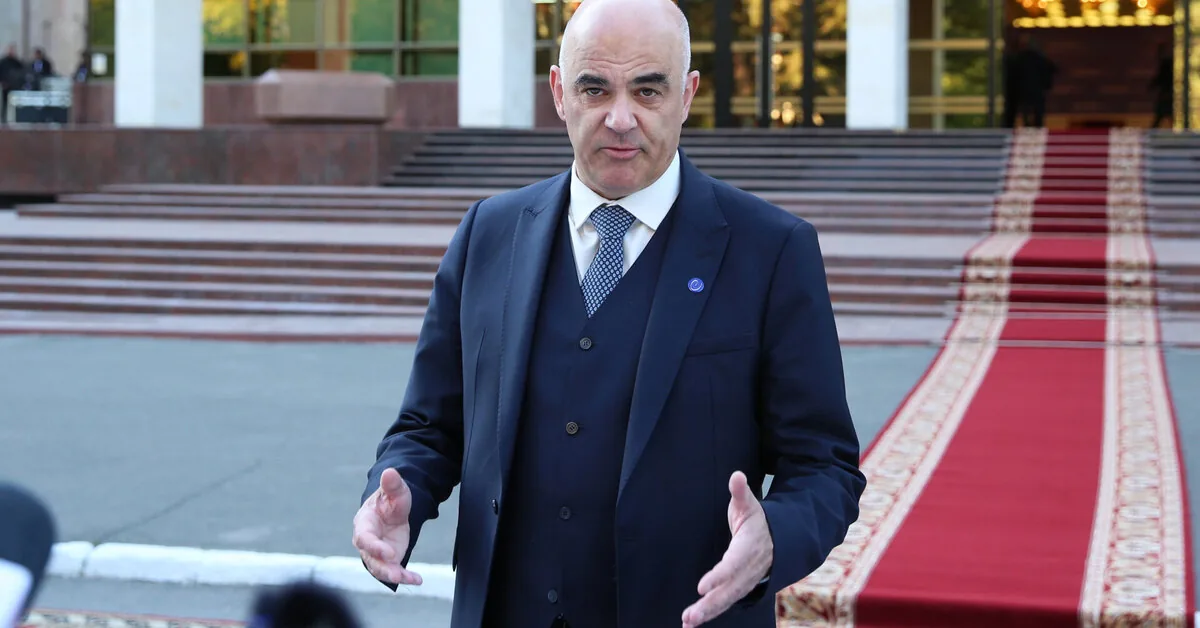
“The crisis has already begun. It has two names: money and power,” wrote Alain Berset, head of the Council of Europe (CoE) uniting 46 countries, in an open letter to his official partner FIFA on Sunday, just hours before the final match between Spain and Argentina.
Swiss politician A. Berset mentioned that FIFA, pressured by US President Donald Trump, suspended the disqualification of US forward Folarin Balogun, and also pointed out the risk of fraud as the football organization signed a sponsorship deal with a prediction market company.
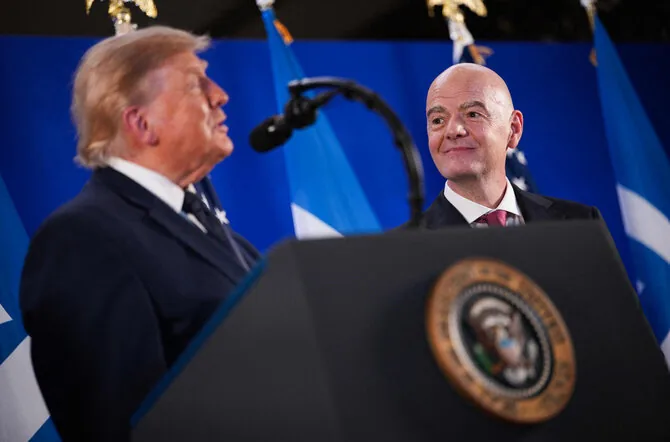
“When rules bend under pressure, every result is questionable,” wrote A. Berset about the removal of the mandatory one-match suspension for F. Balogun before the match against Belgium, which was fought for a place in the quarterfinals. Belgium won that match 4-1.
“Political influence has also moved onto the field,” said A. Berset, who was twice president of Switzerland, where FIFA headquarters are located. “The sanction, suspended in the middle of the tournament, was applied after a head of state called the FIFA president.”
In April, FIFA signed a sponsorship deal with the betting prediction company ADI Predictstreet, reportedly worth 150 million USD (131 million euros), a week after this Abu Dhabi-backed company was officially established.
FIFA also has other commercial agreements with the gambling industry for this World Cup.
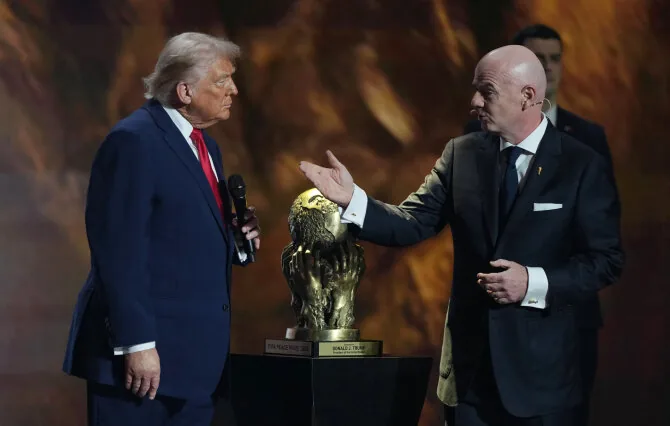
Betting predictions face widespread criticism, and A. Berset noted that in football this allows winning bets on “moments that can be created by one player without changing the result.”
“It is an open door to cheating,” he wrote. “And this World Cup has opened that door even wider.”
The CoE expressed its concern publicly, despite having an official cooperation agreement with FIFA, signed in 2018 by its president Gianni Infantino.
Read more Peru earthquake claimed five lives
This intergovernmental institution, which created the European Convention on Human Rights, aims to “promote democracy, human rights and the rule of law throughout Europe and beyond.”
When signing the memorandum of understanding between FIFA and the CoE eight years ago, G. Infantino said: “These are natural relations because we share common values and goals: transparency, accountability, integrity, safety in sport, and respect for human rights, children’s rights.”
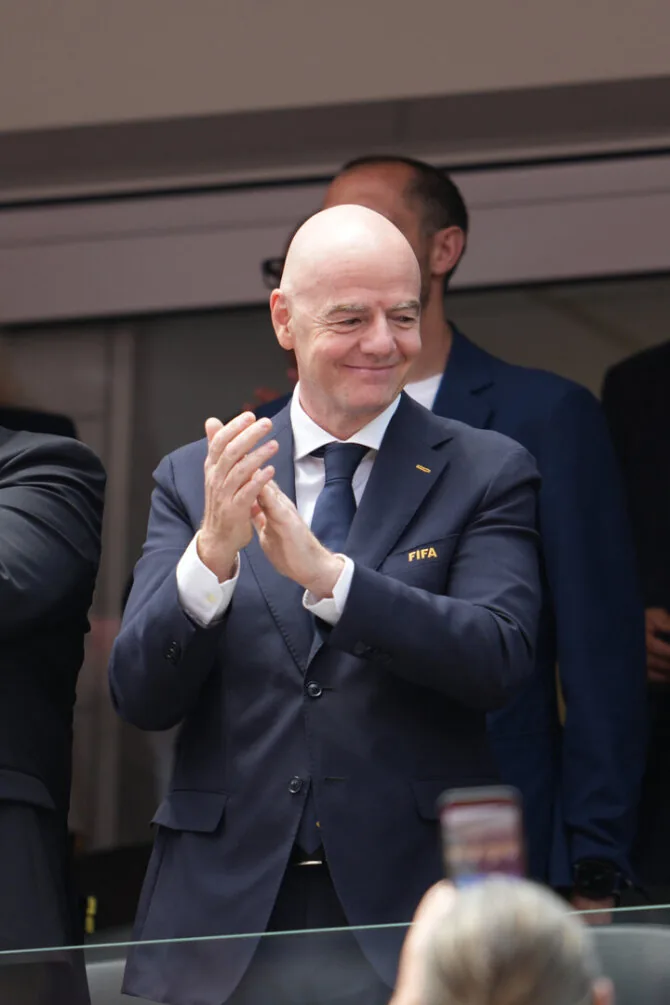
G. Infantino and A. Berset met in 2024 on the sidelines of the United Nations (UN) General Assembly in New York.
The European football association UEFA strongly criticized FIFA’s disciplinary decision regarding F. Balogun, stating that this decision “crossed a red line” in terms of football’s rule of law and transparency. FIFA has not yet published documents explaining the arguments of its disciplinary judge from the United Arab Emirates (UAE).
“The sanction was suspended under pressure, within a few days, without any reasons given,” wrote A. Berset, also mentioning other concerns about the first championship featuring 48 teams and 104 matches.
“Questionable referee authority. Racist attacks against players, some from selected officials. Betting on every pass, every card, every corner,” he wrote.
The next men’s World Cup will mostly take place in Europe, with Morocco also being one of the hosts. Currently, it is planned that three South American neighbors – Argentina, Paraguay, and Uruguay – will each host one match at the start of the centennial tournament in June 2030, honoring the first 1930 World Cup host Uruguay.
“So, here is my proposal to FIFA,” wrote A. Berset. “A working dialogue starting tonight to create a transparency system for the 2030 World Cup even before it begins.”
Read more ITF final Justina Mikulskytė acknowledged the Polish player’s superiority